
Last Updated on September 3, 2026 by Jeremy

Transparency: This article combines current third-party research with my firsthand experience building and managing websites, content systems and AI-assisted workflows. Employment projections are not guarantees. I use AI in my work, but I review, correct and approve what carries my name.
AI can already produce a clean blog post, an image, a video outline, a social caption and a basic content plan in less time than many creators need to make coffee.
That makes the obvious question uncomfortable: if a machine can create all of that, what happens to the person who used to get paid to do it?
I have spent years writing, building websites and learning content marketing through real projects. More recently, I have pushed AI beyond simple drafting and into full website audits, branded article batches, analytics investigations, code repairs and long-running workflows. I have seen how much work it can remove. I have also seen exactly where it still needs context, correction, permission and a person willing to own the result.
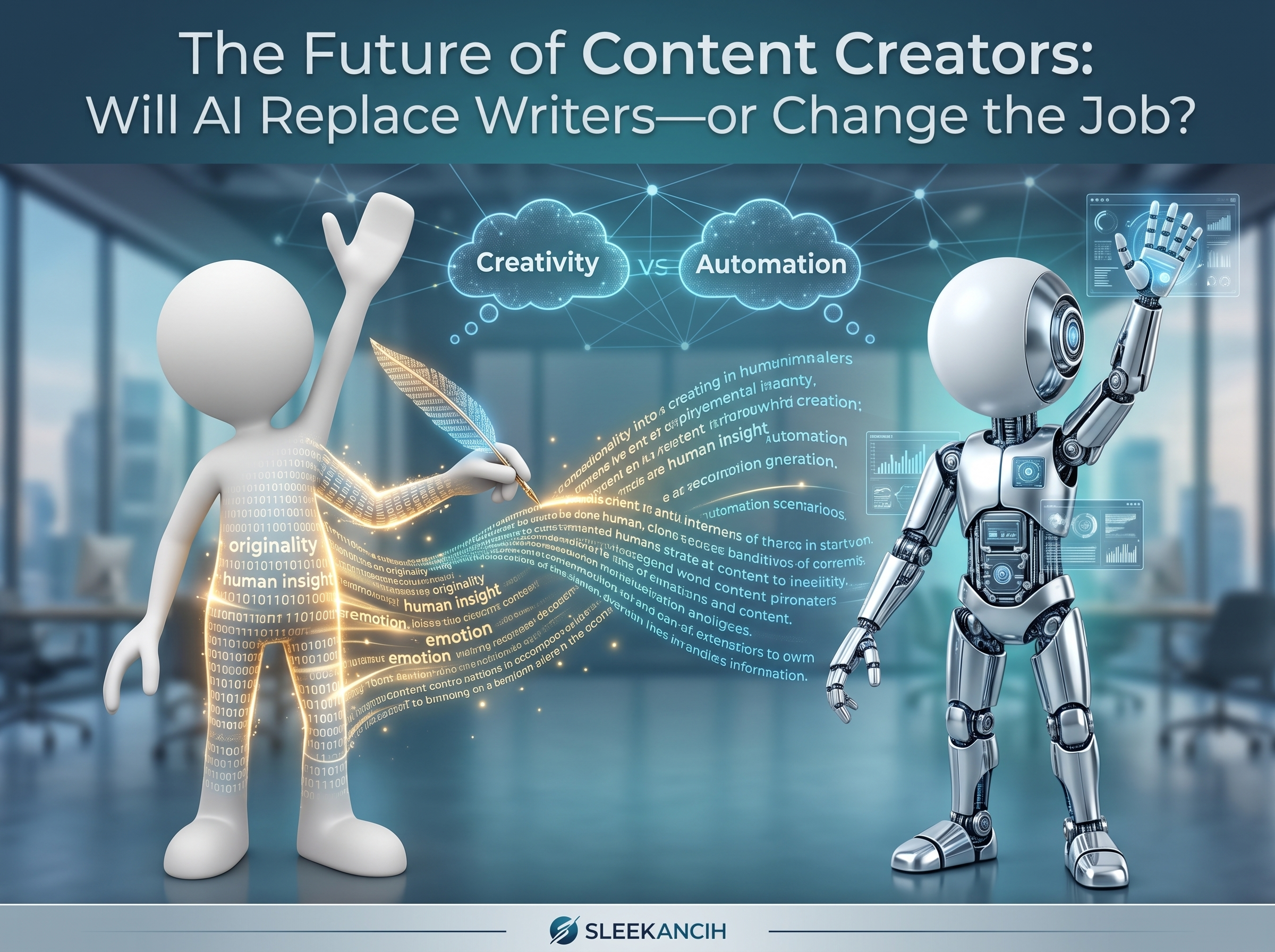
The future of content creators is not a simple story about humans winning or AI winning. The job is being divided into tasks—and the market value of those tasks is changing quickly.
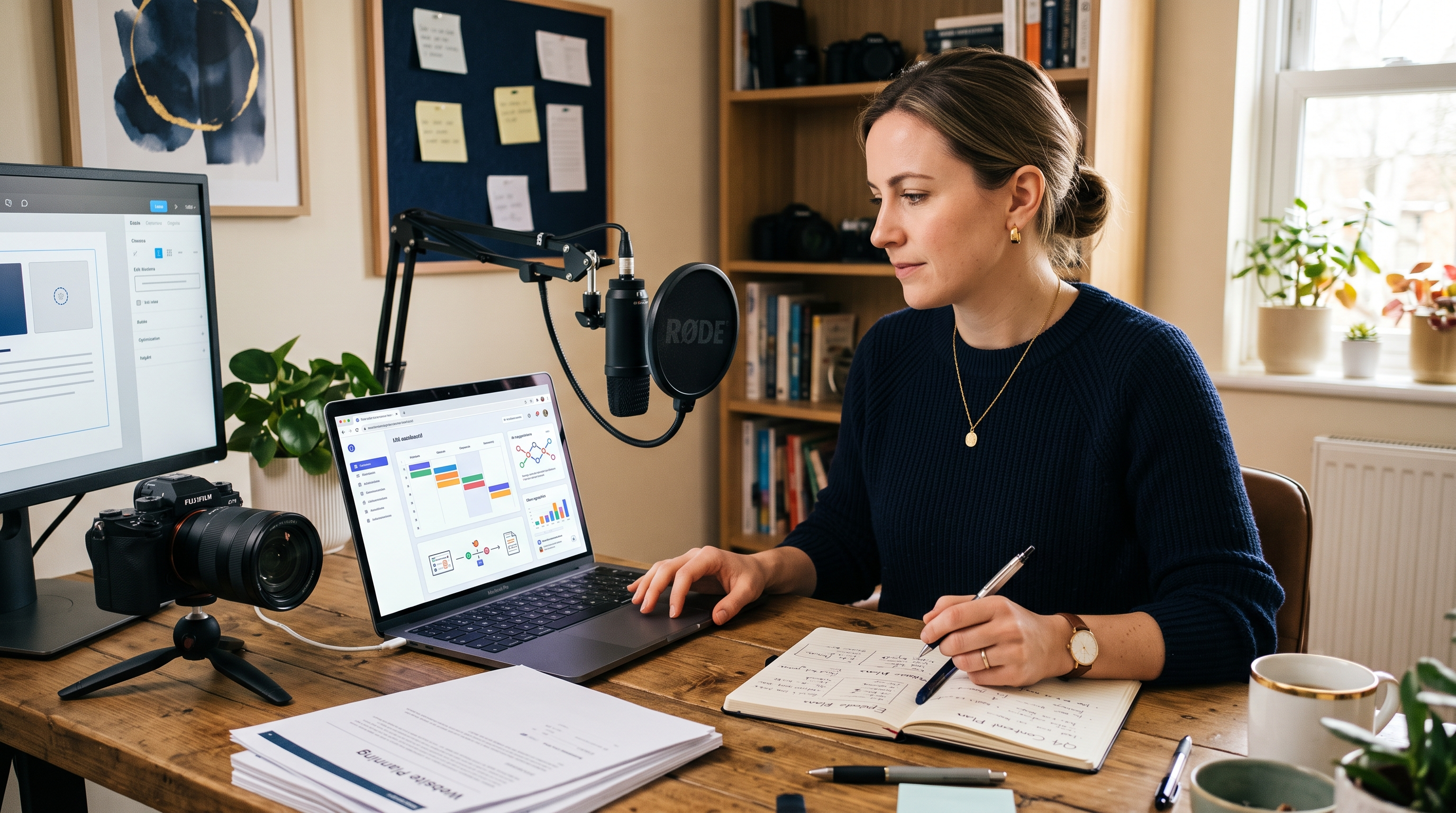
My conclusion: AI is reducing the value of generic production while increasing the value of original experience, judgment, verification, strategy and trust.
Will AI Replace Writers and Content Creators?
AI will replace some writing tasks, reduce some entry-level assignments and change what clients are willing to pay for generic content. That is already happening. But “content creator” is not one task. Research, interviews, field experience, strategy, fact-checking, editing, audience understanding, photography, video, distribution, accountability and trust do not disappear because a model can generate sentences.
The most exposed creator is someone selling undifferentiated output by the word. The better-positioned creator owns expertise, relationships, an audience, original evidence, a recognizable point of view and the ability to use AI without surrendering editorial control.
What the Evidence Says About the Future of Content Creators
No employment report can tell us exactly how every creator’s career will unfold. “Content creator” also covers freelancers, salaried writers, editors, marketers, YouTubers, photographers, business owners and people who combine several of those roles.
Still, the current evidence gives us useful boundaries.
Workers globally are in occupations with some generative-AI exposure, according to the International Labour Organization’s 2025 index.
Projected U.S. employment change for writers and authors from 2025 to 2035—not mass growth, but not occupational disappearance either.
Average annual U.S. openings projected for writers and authors over that decade, largely replacing workers who leave or change occupations.
The ILO’s central finding matters more than the headline number: exposure does not mean an entire occupation will vanish. Because most jobs combine tasks that still require human input, the organization says job transformation is the most likely effect.
The U.S. Bureau of Labor Statistics is less comforting than a motivational speech. Its latest projection says AI use for writing is expected to dampen demand for writers and authors. It also says writers will continue to be needed for online media and advertising. For editors, it projects a modest 1% decline through 2035 while still estimating about 7,900 openings per year.
Those figures describe the United States and traditional occupational categories, not every independent creator worldwide. They do, however, undermine both extreme claims. The data does not say that nothing will change. It also does not say nobody will need writers.
AI Is Automating Tasks Before It Replaces Whole Jobs
A client does not really buy “1,500 words.” A business needs a problem solved: explain a product, earn attention, answer a customer question, build trust, generate a qualified lead or help somebody make a decision.
Until recently, producing the words consumed enough time that writing looked like the whole job. AI exposes how many separate decisions were hiding underneath it.
| Content task | What AI can do well | Where people still add decisive value |
|---|---|---|
| First draft | Produce a structured starting point quickly | Decide whether the angle is useful, accurate and worth publishing |
| Summary or rewrite | Condense, reformat and vary existing material | Recognize what was lost, distorted or removed from context |
| Keyword content | Cover common subtopics and phrase variations | Match real intent and add something competitors cannot regenerate |
| Research assistance | Locate, organize and compare large amounts of information | Select authoritative sources, resolve contradictions and avoid false certainty |
| Images and video | Create concepts, drafts, B-roll and repurposed assets | Supply real people, places, demonstrations, events and brand judgment |
| Publishing workflow | Format, link, generate schema and prepare files | Approve claims, disclosures, commercial choices and final quality |
The risk is concentrated wherever speed and adequate-looking output are the only differentiators. Generic explainers, thin rewrites, mass product descriptions and low-context first drafts can now be produced at enormous volume.
That does not make clear writing worthless. It means clear writing by itself is easier to obtain.

Generic Content Is Becoming a Commodity
Google’s current guidance is unusually direct. It says generative AI can help with research and structure, but generating many pages without adding value may violate its scaled-content-abuse policy. Its newer guidance for AI search tells publishers to create non-commodity content and specifically contrasts a firsthand review with a summary that merely restates information available elsewhere.
This matches what I explored in my article about zero-click search trends. If your page only rearranges public facts, both search engines and AI assistants can increasingly answer the question without sending the reader to you.
My small-website AI citation test asks a related question: can a smaller publisher become a visible source by making its pages crawlable, focused, well-supported and genuinely useful? There is no guaranteed citation trick. The defensible strategy is creating pages that deserve to be used as sources.
What My ChatGPT Work Testing Taught Me
My strongest evidence is not a prediction. It is the work I have already completed with AI.
In my ChatGPT Work review, I document using the platform for substantial assignments across several websites. OpenAI describes ChatGPT Work as a way to use files, approved tools and multiple steps to produce reviewable outputs. My tests included site audits, analytics checks, branded HTML articles, development files and recovery from interrupted browser sessions.
The platform could gather information, compare pages, prepare files, maintain a checklist and continue through a large assignment. But it could not manufacture the business truth required to finish responsibly.
The Costa Rica road
AI could compare maps and public route information. I had to explain which road I had personally driven repeatedly, why I trusted it and where my firsthand knowledge ended.
The 157 “leads”
A dashboard number looked impressive. Human scrutiny was necessary before treating those events as 157 legitimate customer inquiries.
The travel handoff
The system could build a workflow. It did not inherently know which person should receive a lead or what commercial relationship existed behind that decision.
The failed WordPress saves
AI could preserve the method and check whether changes landed. A human still had to approve or manually complete steps when browser errors made automation unreliable.
This is the difference between producing content and running a content business. The machine can help assemble the work. The person whose name, customer relationship and reputation are attached to it remains accountable.
AI vs Human Content Creation Is the Wrong Competition
People often compare one unaided human with one AI-generated draft. That is not how the market will operate. The real comparison is increasingly:
Generic human production
Slower, more expensive and still capable of being shallow or inaccurate.
Unsupervised AI production
Fast and inexpensive, but vulnerable to generic output, false claims and weak accountability.
AI-assisted expert production
Faster execution combined with real knowledge, verification, direction and responsibility.
The third model is the one I am betting on.
I use AI because it can help me move faster across research, structure, formatting, code and repetitive production. I remain involved because I know which claims come from my life, which numbers need another look, which recommendation affects a real client and whether the finished page deserves to be published.
My earlier five-stage AI partner workflow shows how I use AI through validation, outlining, drafting, visuals and optimization. My beginner’s guide to AI agents explores the next step: connecting those tasks into supervised workflows. This article has a different purpose. It asks what those capabilities mean for the person doing the job.

Content Creator Roles in the Future
The creator of the future may write fewer routine sentences while making more decisions about what deserves to exist.
| Role becoming more important | What it involves | Why it is harder to commoditize |
|---|---|---|
| Experience collector | Testing products, visiting locations, interviewing people and documenting outcomes | The evidence must happen in the real world before it can be described |
| Editorial director | Choosing angles, standards, sources, exclusions and publication decisions | It requires judgment and responsibility, not just generation |
| Fact-checker and verifier | Tracing claims to primary sources and checking changing information | Confidence is not proof; someone must resolve uncertainty |
| Multimedia producer | Combining articles, original images, demonstrations, video, audio and tools | A useful experience is broader than a block of text |
| Audience and community builder | Listening, responding, earning trust and recognizing recurring needs | Relationships accumulate through real interaction |
| Workflow designer | Directing AI, documenting processes, setting approvals and evaluating results | Automating a weak process only produces weak work faster |
| Asset owner | Owning websites, email lists, products, original data and intellectual property | Income is less dependent on selling another disposable draft |
The Bureau of Labor Statistics already notes that employers may prefer writers who can create visual stories with charts, maps and infographics, and that multimedia software knowledge can help. That is another reason to stop defining the profession as typing alone.
I learned the same lesson by building projects rather than collecting one narrow credential. My article about building seven websites instead of returning to university documents how writing expanded into SEO, analytics, design, affiliate strategy, WordPress, AI and problem-solving. The websites were not just places to post articles. They became the classroom and the portfolio.
Authenticity in the Digital Age Requires Evidence
“Be authentic” is becoming one of those phrases that sounds meaningful until everyone repeats it.
Authenticity is not refusing every tool. Handwriting an inaccurate article does not make it trustworthy. Using AI to organize verified research does not automatically make it fake.
For creators, authenticity means keeping the evidence boundary visible:
- Firsthand experience: what you personally used, visited, built, paid for or observed.
- Verified information: what a current, credible source establishes.
- Inference or opinion: what you reasonably believe but cannot present as settled fact.
- AI assistance: where automation materially helped create an image, draft or workflow.
- Commercial interest: where a recommendation or link may benefit you financially.
This is why I disclose AI-generated article images and why I separate affiliate promotion from evidence. Google’s guidance similarly recommends giving readers useful context about how automatically generated content was created.
Originality is not a writing style. It is having something real to contribute.
AI-Generated Content Ethics in 2026
The ethical question is not only whether AI was used. It is whether a creator concealed something that would materially change how the audience evaluates the work.
Use AI responsibly for
- Research organization
- Outlines and alternative structures
- Editing and readability
- Formatting and schema preparation
- Repurposing approved source material
- Exploring questions you will verify
Stop and reconsider when
- Experience is being invented
- A quotation or source cannot be confirmed
- Someone’s likeness or work is being misrepresented
- Volume replaces reader value
- Sensitive advice lacks qualified review
- No person is willing to own the outcome
A disclosure cannot rescue useless content. Human editing cannot rescue fabricated evidence. The standard is whether the finished work is accurate, useful, original enough to deserve attention and honest about the basis of its claims.
How Content Creators Can Make Money as AI Expands
No model guarantees income. The useful shift is moving away from selling generic production alone and toward outcomes, expertise and owned assets.
Services
Research, editing, AI-output review, content strategy, website audits, multimedia production and supervised content systems.
Owned media
Websites, newsletters, podcasts, communities and channels where the creator builds a direct relationship with an audience.
Products
Templates, tools, guides, memberships, courses, data, books and resources built from genuine expertise.
Performance income
Affiliate content, qualified leads and partnerships where trust and audience fit matter more than word count.
Implementation
Helping a business turn approved content into pages, campaigns, email sequences, reporting and repeatable workflows.
Training and oversight
Teaching teams how to direct AI, verify output, protect brand standards and keep humans accountable.
My own project is still a build in progress. In my real results after nearly four years, I show why assets, skills, failed campaigns and small commissions belong in the evidence alongside the wins. The goal is not to promise creators that adaptation will be painless. It is to make the available paths visible.
How to Use AI for Blogging in 2026 Without Becoming Replaceable
- Choose a problem you actually understand. Use keyword data to see demand, not to manufacture expertise.
- Collect something original. Test the product, take the trip, interview the person, record the result or analyze your own data.
- Give AI defined work. Ask it to compare, organize, challenge, format or draft within clear source and approval boundaries.
- Verify consequential claims. Use current primary sources for changing facts and label uncertainty honestly.
- Add the decision layer. Explain what the evidence means, who it applies to and where the exceptions are.
- Build beyond text. Add original photos, demonstrations, calculators, checklists, video or a useful tool when they genuinely help.
- Publish under a real standard. Disclose relevant automation and commercial relationships, then remain responsible for corrections.
- Own the relationship. Give readers a reason to return, subscribe, ask a question or use something only your brand provides.
You can see the broader mix of writing, analytics, design, video and AI platforms on my Tools I Use page. The stack will keep changing. The ability to judge the result matters longer than any individual subscription.
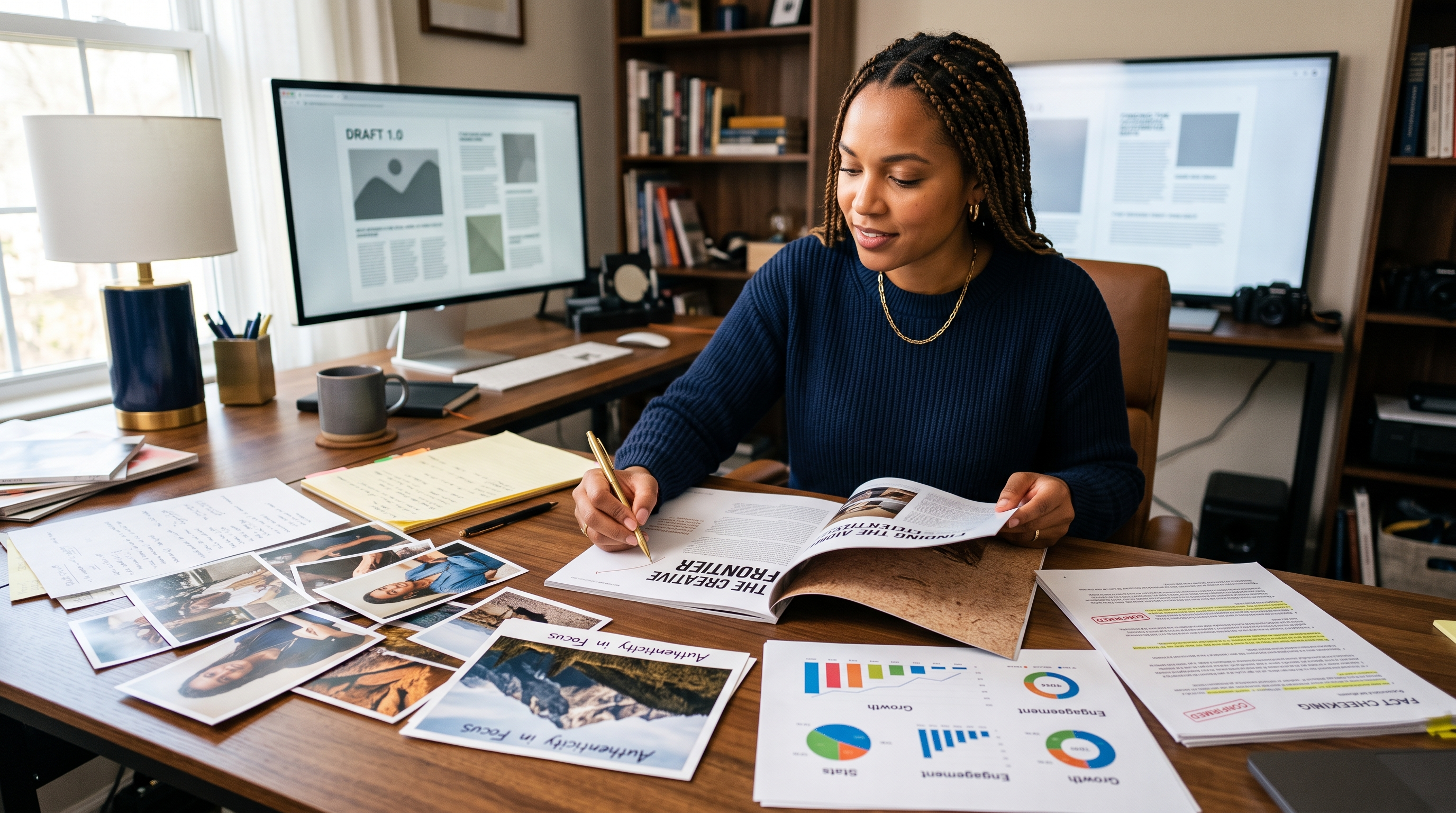
Run a Human-Value Audit on Your Own Work
If AI can reproduce your article from public information, what still makes it yours?
- Did I contribute firsthand experience, original evidence or a genuinely useful interpretation?
- Could I defend the important claims and show where they came from?
- Did I make a decision that required judgment rather than autocomplete?
- Does the article help the reader finish a task or make a better choice?
- Would someone trust this page more because I created it?
- Can the page connect to a tool, service, community, product or relationship I own?
- Have I disclosed anything that would materially affect the reader’s trust?
- Do I have a reason and process to update it?
If most answers are no, the problem is not merely that AI is improving. The content was already easy to replace.
Final Take: The Job Is Changing, Not Disappearing Cleanly
The future of content creators will be uneven. Some routine assignments will disappear. Some rates will fall. Some companies will produce more with smaller teams. New creators may find that the lowest rung of the ladder has become harder to reach because AI performs many of the tasks beginners once learned on.
At the same time, businesses will still need people who understand customers, recognize weak evidence, collect real information, shape a trustworthy message, operate across formats and take responsibility when the output is wrong.
AI is not eliminating the need for creators. It is exposing which part of the creator’s value came from effort alone—and which part comes from experience, taste, judgment, strategy, relationships and trust.
I do not plan to compete with AI at producing the most words.
I plan to become better at deciding which work matters, supplying what the machine cannot know and using the technology to turn that value into something genuinely useful.
Build the Skills Before You Automate the Work
Follow my real tests of AI, websites and online income—or begin with the From 0 to 100K starting point and choose one practical skill to build through a real project.
Read My ChatGPT Work ReviewUnderstand AI AgentsStart HereSources and Further Reading
- International Labour Organization: Generative AI and Jobs—A Refined Global Index of Occupational Exposure
- U.S. Bureau of Labor Statistics: Writers and Authors
- U.S. Bureau of Labor Statistics: Editors
- World Economic Forum: Future of Jobs Report 2025—Skills Outlook
- Google Search Central: Guidance on Using Generative AI Content
- Google Search Central: Creating Valuable, Non-Commodity Content for AI Search
- Official OpenAI Documentation: Get Started with ChatGPT Work
Frequently Asked Questions
Will AI replace content creators?
AI is likely to replace or reduce demand for some routine content tasks, but content creation also requires strategy, experience, verification, multimedia production, relationships and accountability. Current labour research points more strongly toward job transformation than the disappearance of every creator role.
Will AI replace writers in 2026?
Some writers are already losing generic assignments or facing lower rates because AI can produce routine drafts quickly. However, writers with subject expertise, original reporting, strong editing, audience knowledge and broader production skills remain useful. The U.S. Bureau of Labor Statistics projects little or no overall change in writer and author employment from 2025 to 2035, not total elimination.
What content-creation tasks are most vulnerable to AI?
Generic first drafts, summaries, rewrites, templated descriptions, routine social captions and content based entirely on common public information are among the most exposed tasks.
What human skills will content creators need?
Useful skills include firsthand research, interviewing, fact-checking, critical thinking, editorial judgment, multimedia production, audience development, strategy, ethical decision-making and the ability to supervise AI workflows.
Does Google penalize AI-generated content?
Google’s guidance focuses on accuracy, quality, relevance and value rather than banning content simply because AI assisted with it. Generating many pages without adding user value may violate its scaled-content-abuse policy.
How can a content creator stay authentic while using AI?
Keep firsthand experience separate from researched facts and opinion, verify important claims, disclose material automation where it gives readers useful context and remain personally responsible for what is published.
How can content creators make money in an AI-heavy market?
Potential paths include expert services, editing and verification, content strategy, owned websites and newsletters, affiliate content, digital products, multimedia production, workflow implementation and audience-supported businesses. None guarantees income.
Should beginners still become content creators?
Yes, if they are prepared to build real expertise, publish original work, learn several complementary skills and treat AI as part of the production system rather than a shortcut around learning.
Leave a Reply