
Last Updated on May 31, 2026 by Jeremy
I Did Not Plan To Build A Digital Marketing Degree. I Built Websites And Accidentally Earned One The Hard Way.
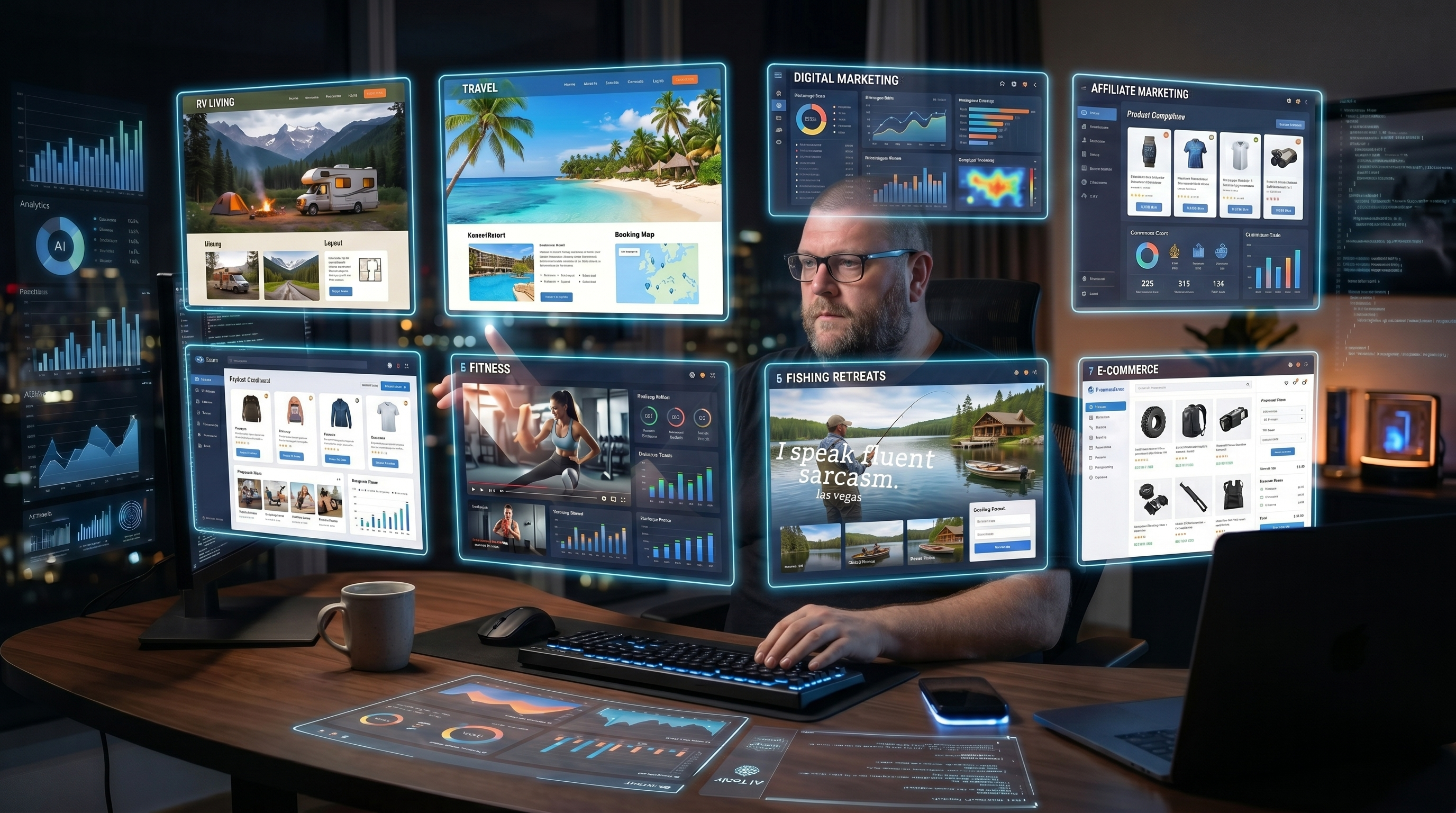
Over the last few years, I built websites in RV living, travel, affiliate marketing, digital education, virtual fitness, fishing retreats, and e-commerce.
Was that the most focused path possible? No.
Was it the fastest way to grow one single website? Probably not.
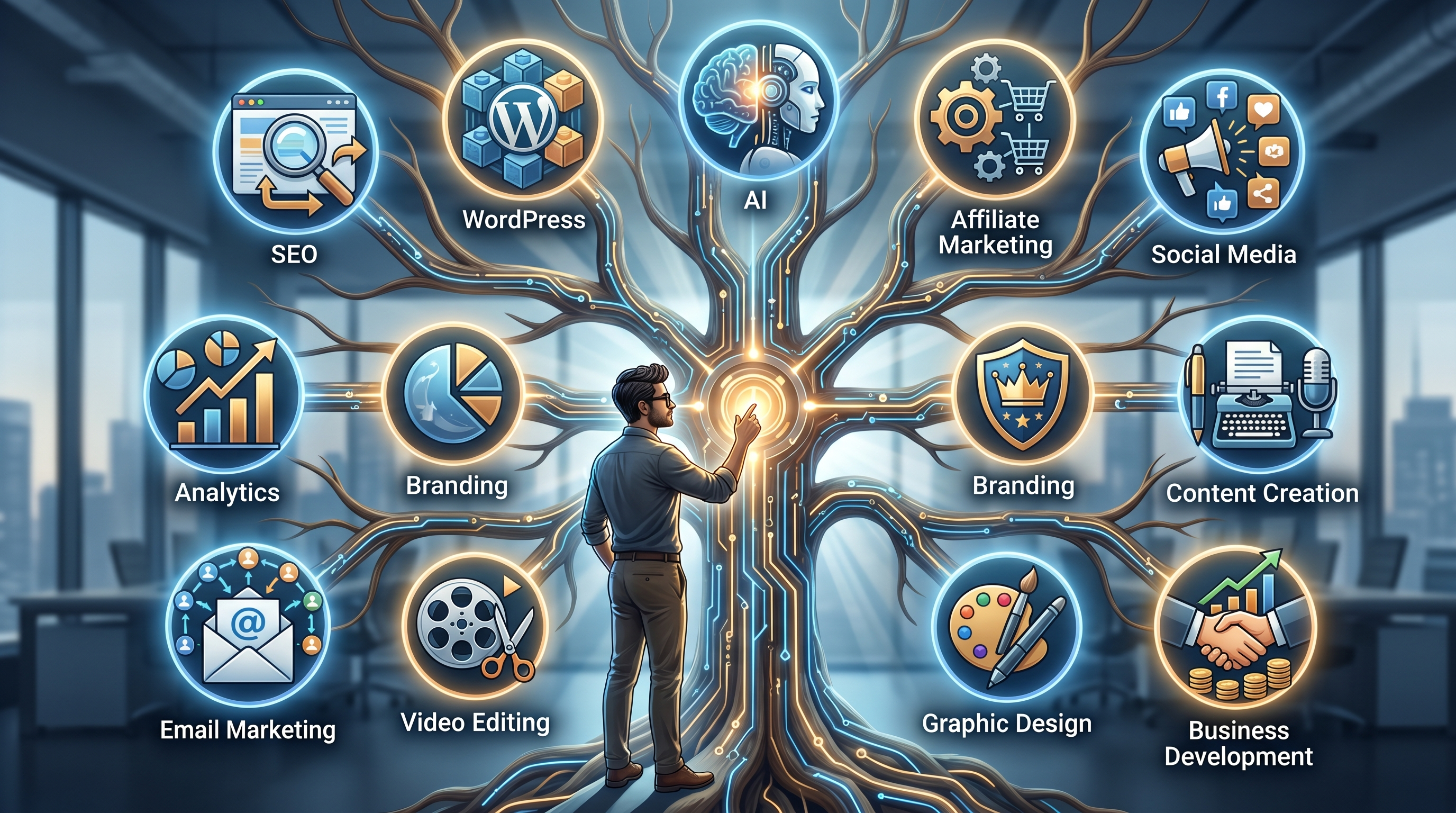
But it taught me more about SEO, WordPress, branding, affiliate marketing, content, AI, analytics, and online business than I ever expected when I first started.
Quick Answer
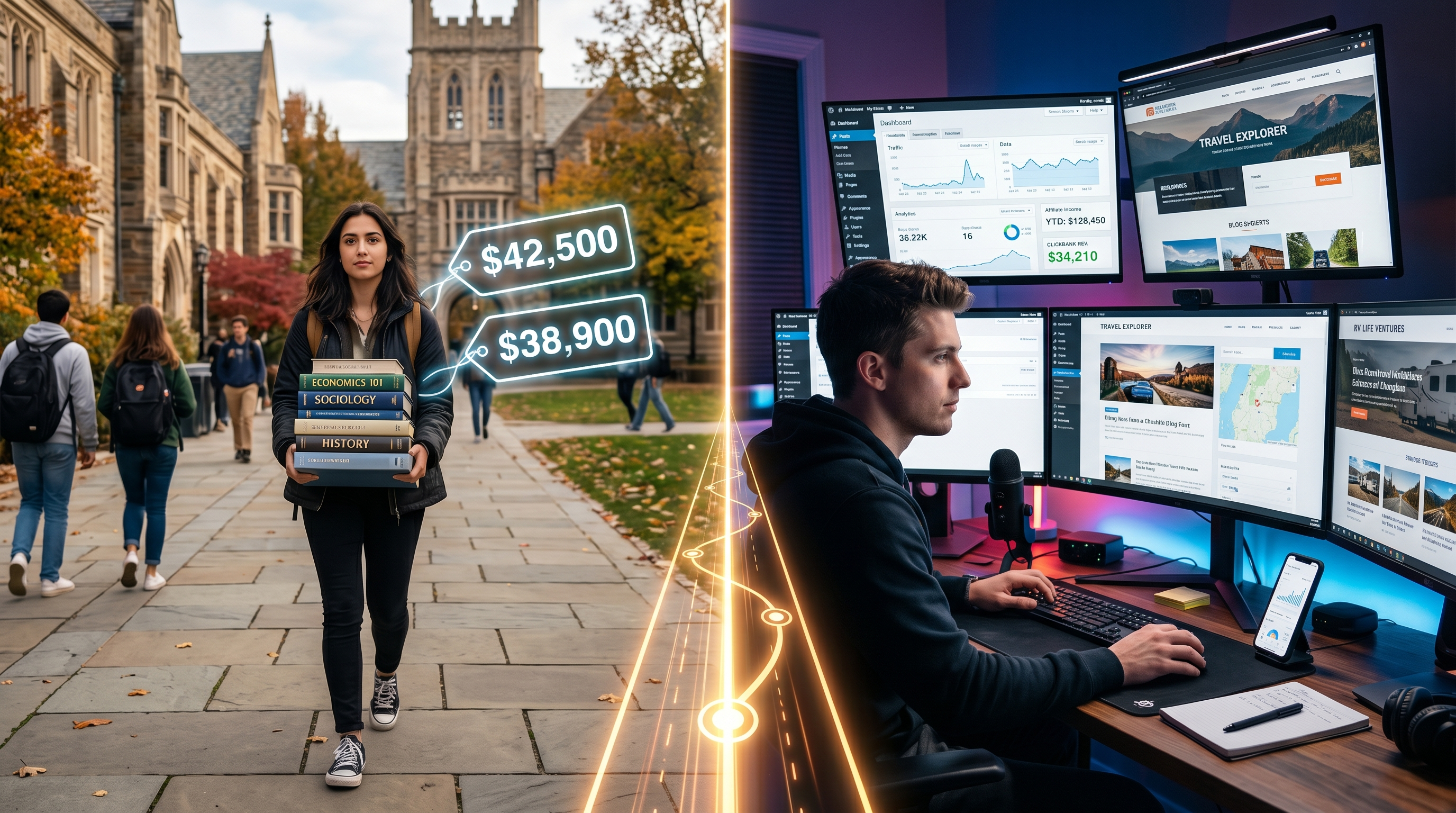
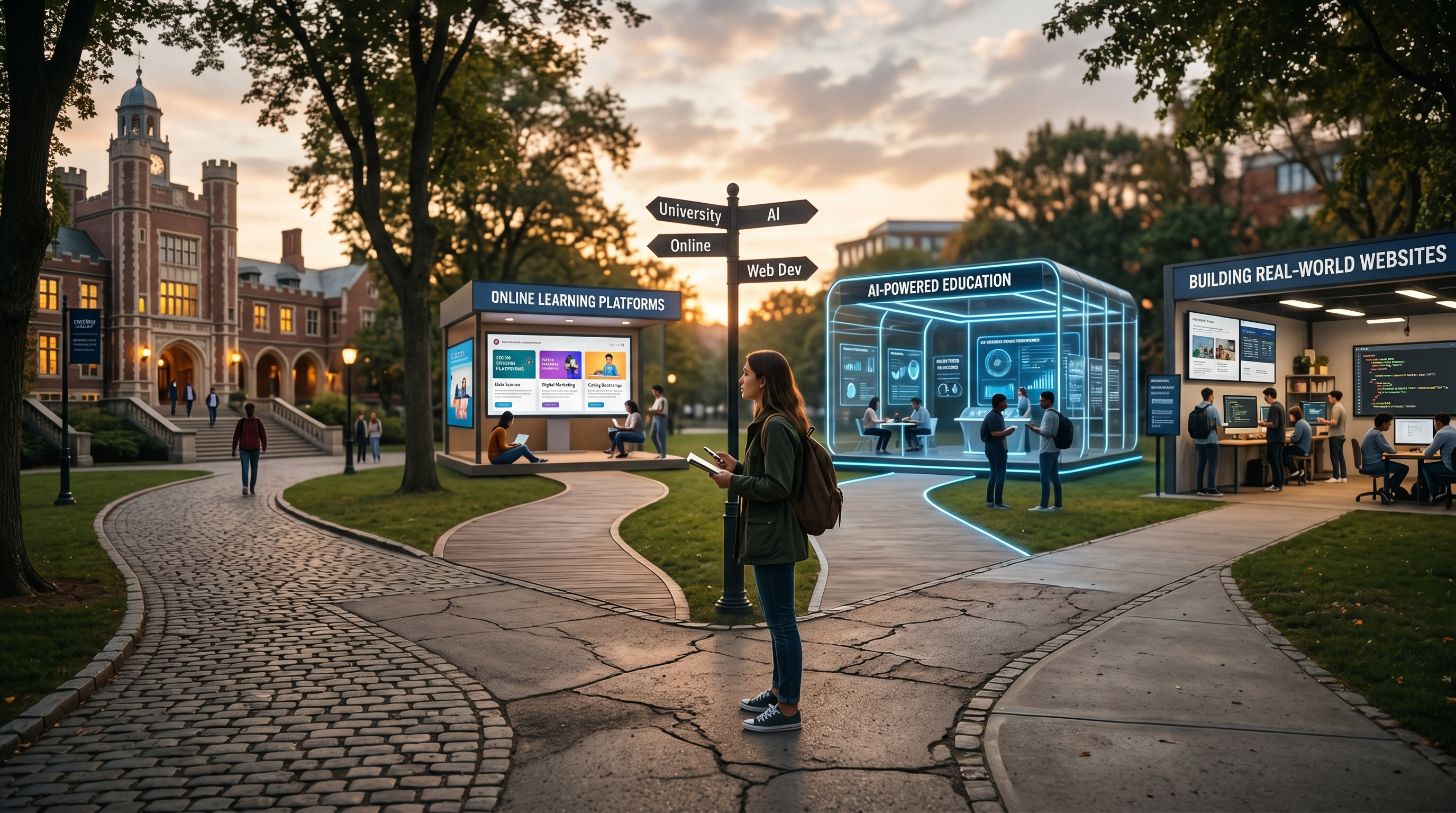
Could I have learned SEO, content marketing, analytics, website building, AI tools, affiliate marketing, branding, and business development through university?
Probably.
Would it have cost more?
Almost certainly.
Would I have gained the same real-world experience as quickly?
I seriously doubt it.
My honest take: university can still be the right path for many careers. But if your goal is to build practical digital income skills, there are more affordable, flexible, and hands-on learning paths available now than most people realize.
The Skills I Learned Because I Had To
I did not sit down with some perfect curriculum and say, alright, today I become a full-stack digital marketer.
That sounds cleaner than what actually happened.
What really happened was this: I kept building things, breaking things, fixing things, testing things, and then realizing I had accidentally learned another skill because the project forced me into it.
What Would University Have Cost?
This is where the comparison gets interesting.
I am not anti-university. Some careers need formal education, credentials, labs, supervision, professional licensing, and structured academic pathways. That is real.
But for practical digital skills like SEO, WordPress, affiliate marketing, AI tools, content strategy, analytics, and online business building, the question changes.
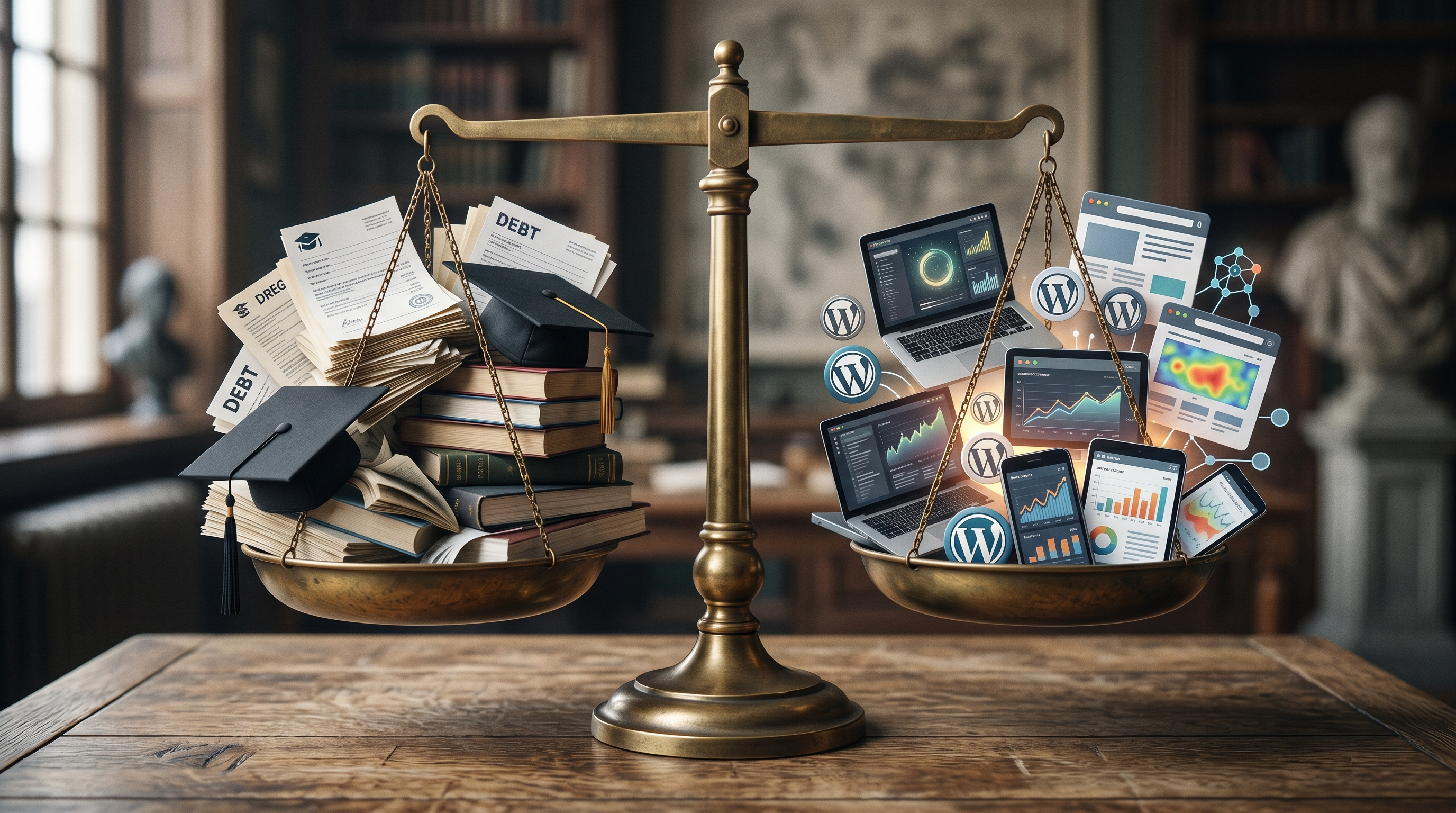
How much would it cost to learn this the traditional way, and would it be as hands-on?
| Learning Path | Possible Cost | What You Usually Get | Where It Can Fall Short |
|---|---|---|---|
| Traditional University | Often thousands per year, plus books, housing, transport, and time. | Structured education, recognized credentials, academic support, and a formal pathway. | May not always move as fast as AI, creator tools, affiliate platforms, or current online business tactics. |
| Online Learning Platforms | Can range from free courses to paid certificates, subscriptions, or premium training. | Flexible learning, targeted courses, lower barrier to entry, and skill-specific training. | You still need discipline, project work, and practical application. |
| Building Real Projects | Domains, hosting, tools, time, mistakes, and a few questionable software purchases. | Hands-on experience, real problems, real data, real publishing, and a portfolio. | No one forces you to stay focused. That part can be dangerous. |
For broader context, Statistics Canada reports Canadian university tuition data, while the National Center for Education Statistics tracks the price of attending undergraduate institutions in the United States. Statistics Canada tuition data and NCES college cost data are both worth checking if you want the bigger cost picture.
The Website Portfolio That Became My Classroom
This was not a clean straight line.
It was more like a digital junk drawer that slowly turned into a system.
Some projects moved faster than others. Some sat quiet longer than they should have. Some were built for affiliate income. Some were built for clients. Some were built because I wanted to test an idea before talking about it like I knew what I was doing.
 Everything RVs and More
Taught me RV content, product reviews, technical how-to articles, affiliate programs, store tie-ins, and niche problem solving.
 Earthbound Tours
Taught me travel affiliates, booking tools, tour content, destination intent, Pinterest traffic, and delayed conversion thinking.
 FlyFishCR
Taught me client work, booking platforms, tour packaging, OTA thinking, and how different service businesses need different trust signals.
 Nomad Ninja
Taught me digital nomad positioning, affiliate education angles, online income messaging, and how not to make everything sound like laptop-on-a-beach fluff.
 Virtual Fitness Quest
Taught me VR fitness positioning, emerging niche content, safety-first messaging, and how to build around a newer category.
 From 0 to 100K
Became the public build, the proof log, the review hub, and the place where all these messy lessons started connecting.
If I had focused on one website from the start, I might be further ahead in one lane. But I also would not understand the bigger picture the same way I do now.
The Biggest Lesson Was Not SEO
The biggest lesson was learning how to solve problems.
Every website created a new problem. Every problem forced a new skill. Every skill opened another door.
That is why building real projects can teach so much faster than passive learning alone. You are not just memorizing ideas. You are forced to use them.
Modern Learning Is Different Now
When people talk about learning digital skills, they often jump straight to the old choice: school or no school.
I think that is too narrow.
Today, you can mix structured courses, online communities, AI tools, hands-on projects, free learning platforms, and real-world publishing into your own learning path.
Explore Alison courses
Read my Wealthy Affiliate review
The point is not that Alison replaces Wealthy Affiliate, or that Wealthy Affiliate replaces every course. The point is that modern learners can build their own stack. Learn the skill. Apply the skill. Publish something. Test it in the real world.
The Digital Toolbox Matters
One thing I wish I understood earlier is that online business is not built with one magic tool.
It is a stack.
Website tools. Writing tools. SEO tools. Analytics tools. Design tools. Video tools. Email tools. Affiliate networks. AI tools. Business tools.

That is why I built a full page showing the actual tools I use for From 0 to 100K. It includes website building, SEO, writing, design, video, affiliate, analytics, ecommerce, AI, and business tools.
You can see that here: Tools I Use to Build From 0 to 100K.
Was Building 7 Websites A Mistake?
Yes and no.
If the only goal was to grow one site as fast as possible, then yes, I probably expanded too early. One focused site would likely have given me cleaner authority, stronger content depth, and less mental bouncing around.
But if the goal was to become a better builder, learn more skills, understand different markets, test different affiliate models, and develop real-world experience, then no, it was not a mistake.
The websites did not all move at the same speed. Some stalled. Some surprised me. Some taught me lessons that had nothing to do with the original niche.
That is the part people miss when they only judge projects by immediate revenue.
Sometimes the first return is not money. Sometimes the first return is skill.
If I Started Again Today
If I could go back to the beginning, I would not start by building seven websites.
I would start with one main site, one clear audience, one content plan, and one primary monetization path. I would give that site more focused time before expanding.
That is also why I built the Blueprints Hub. Different people need different starting points, but the core idea is the same. Start with a real skill path. Build something useful. Let the data teach you.
Final Verdict
I did not build seven websites because I had some perfect master plan.
I built them because I was curious, stubborn, distracted, ambitious, and probably a little too willing to chase the next useful idea.
Not exactly textbook strategy.
But looking back, those websites became something bigger than a messy portfolio.
They became my practical education.
I learned SEO by needing traffic. I learned WordPress by breaking layouts. I learned affiliate marketing by chasing clicks that did not always convert. I learned branding by realizing weak positioning makes everything harder. I learned analytics by needing to know what was actually happening instead of guessing.
I did not buy a digital marketing degree. I built one.
If your goal is a formal credential, university may still be the right path.
If your goal is practical digital skills that can help you build websites, content, traffic, tools, offers, and income paths, then you have more options now than ever before.
The key is not just learning.
The key is learning while building.
Start Building Your Own Skill Stack
Start with the roadmap, explore the tools, or use Alison to add structured learning around the skills you want to strengthen.
FAQ
Can you learn digital marketing without university?
Yes. Many digital marketing skills can be learned through online courses, hands-on projects, communities, AI tools, and real-world publishing. University can still be valuable, but it is not the only path for practical online business skills.
Is building websites a good way to learn digital skills?
Yes, because websites force you to apply skills instead of only studying them. You learn content, SEO, design, analytics, monetization, branding, and problem solving by working on real projects.
Was building seven websites instead of one a mistake?
It depends on the goal. For faster growth, focusing on one website longer may have been smarter. For skill development, building multiple websites created a much broader learning experience.
Where does Alison fit into this learning path?
Alison can help with structured online learning across business, technology, AI, marketing, and professional development topics. It works best when paired with real projects where the skills are applied.
Where does Wealthy Affiliate fit into this learning path?
Wealthy Affiliate fits as a hands-on website, hosting, training, keyword research, affiliate marketing, AI tool, and community platform. It is especially useful for people who want to build an online business while learning.
What is the best way to start learning digital business skills?
Pick one main project, learn the skills needed for that project, publish real work, study the data, and improve. Do not only collect courses. Build something that forces the learning to become practical.


Leave a Reply