
Last Updated on August 22, 2026 by Jeremy

Affiliate disclosure: This article includes affiliate and referral links. If you click through and make a purchase, sign up, or take a qualifying action, I may earn a commission or referral reward at no extra cost to you.
I keep seeing confident instructions about how to get cited by AI. Add a special file. Rewrite every heading as a question. Install another schema plugin. Buy a tracking tool. Wait for ChatGPT, Google or Copilot to reward the effort.
There is one problem: I do not yet know which of those changes will help one of my small affiliate websites earn a citation. Instead of pretending I already have a winning formula, I am setting up a practical test and publishing the method before I know the outcome.

This image was created with AI for illustrative purposes.
This is not a case study written backwards from a success screenshot. It is a live experiment with a method, a control and room for a zero.
Quick Answer: Can a Small Website Get Cited by AI?
A small public website can be eligible to appear as a source in AI-powered search, but no platform guarantees a citation. The practical starting point is familiar SEO work: make the page crawlable and indexable, answer a specific question better than commodity content, show who created it, support factual claims and measure what actually happens.
- Google: says no special AI optimization is required beyond strong search fundamentals.
- ChatGPT Search: requires access for OAI-SearchBot if a publisher wants pages included in summaries and citations.
- Bing: now provides AI citation reporting through Bing Webmaster Tools.
- My test: fixed pages, fixed prompts, dated checks and no invented results.
What “Cited by AI” Actually Means
An AI citation is a visible source link attached to or displayed beside an AI-generated answer. It is different from an AI mentioning a brand without linking, and it is different from an ordinary blue-link ranking.
Cited URL
The answer identifies a specific page from my site as a source. This is the main result I am testing.
Brand Mention
The answer names a site or business but provides no source link. Useful to record, but not the same result.
AI Referral
A person follows a citation and reaches the website. OpenAI says ChatGPT Search referral URLs include utm_source=chatgpt.com.
Search Ranking
A page appears in conventional search results. That may support discovery, but it does not prove the page was used in an AI answer.
This distinction matters because “my brand appeared” can sound more impressive than the evidence supports. My results log separates all four outcomes.
Why This Is Not Another Zero-Click Search Article
I have already written about zero-click search trends and why I am building an AI tool instead of relying on another generic blog. That article explains the larger change: search increasingly answers questions before a visitor reaches a publisher.
This article has a narrower job. I want to learn whether pages from small sites can become visible sources, which technical barriers I can remove, and what I can honestly measure without confusing correlation with proof.
The approach also fits the way I have been building MyOutdoorCompass without pretending to be a traditional developer. Define the problem, test the system, record the failures and improve the part that can actually be improved.
Test Status: Results Are Not Known Yet
Status as of August 22, 2026: protocol prepared; baseline and repeat measurements still pending. I will update the results table with dates and screenshots after the selected pages are published, indexed and retested.
Publishing this status now matters. If the experiment produces no citation, that is still a result. It tells me more than silently changing the method until I can manufacture a victory lap.
The Pages I Am Putting Into the Test
I am choosing pages with information that is difficult to replace with a generic summary. One is rooted in Canadian RV conditions. Another uses a Costa Rica route I have travelled repeatedly. A third documents the experiment itself.
| Test item | Page angle | Why it belongs | Starting status |
|---|---|---|---|
| Test page A | LiFePO4 RV battery storage through a Canadian winter | Specific climate, equipment and decision context | Pending baseline |
| Test page B | Liberia Airport to Upala and Río Niño Lodge | A route I have travelled, including why the Bijagua option can make more sense | Pending baseline |
| Test page C | This AI-citation experiment | Original method, dated observations and update history | Pending publication |
| Control page | An existing indexed article left unchanged | Creates a basic comparison with pages receiving deliberate improvements | To be selected before baseline |
What I am not doing: testing a hundred unrelated URLs and celebrating whichever one appears. The pages and prompts will be chosen before the repeat runs.
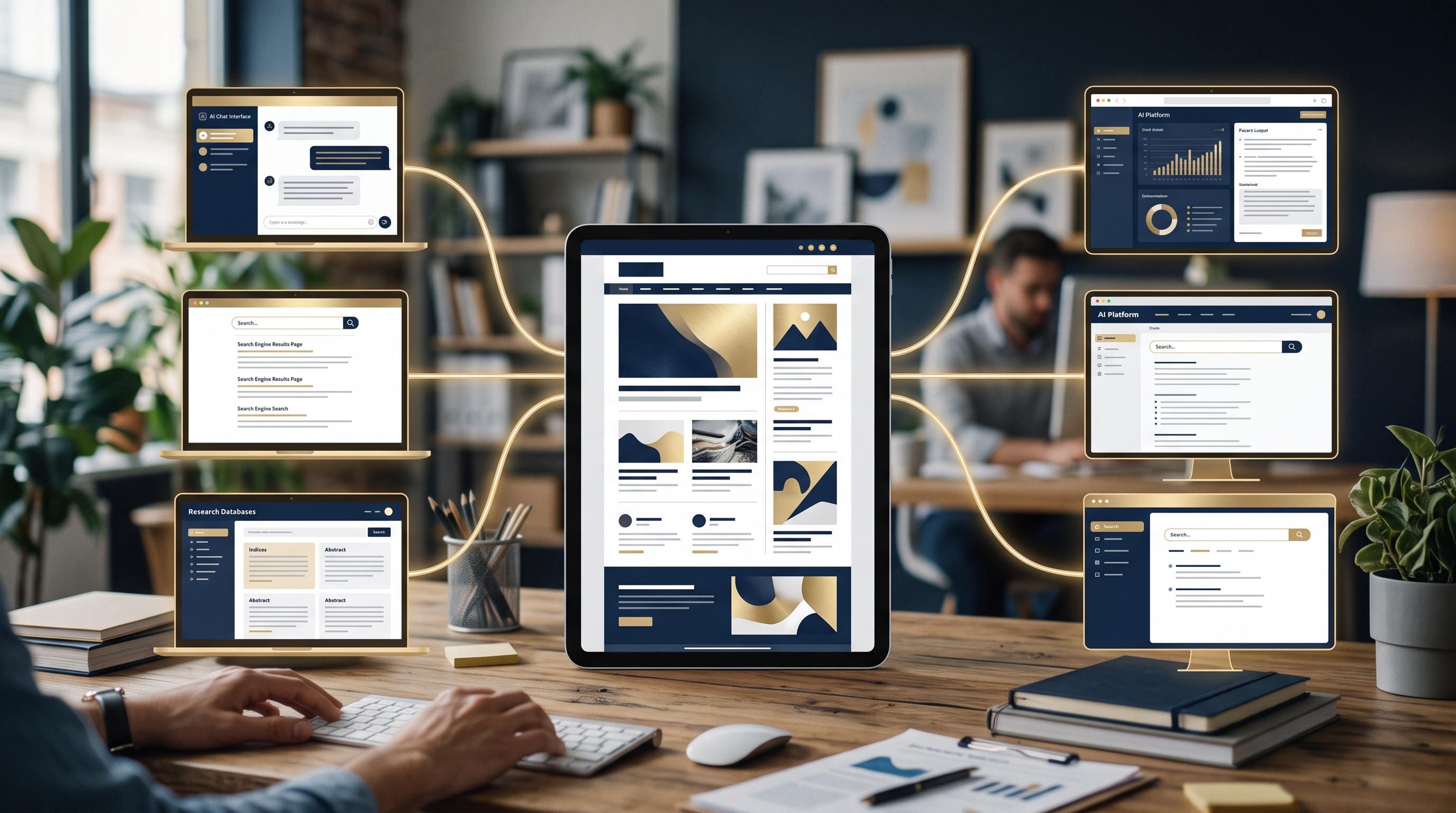
This image was created with AI for illustrative purposes.
Step One: Check Whether the Pages Are Technically Eligible
Before changing the writing, I need to confirm that search systems can reach and understand the page. A brilliant article hidden behind the wrong crawling directive is not an AI visibility problem. It is a technical publishing problem.
Indexing checks
- Indexed or eligible in Google
- Indexed or submitted in Bing
- Correct canonical URL
- Included in the XML sitemap
- No accidental
noindex - Snippets permitted
AI-search access
- OAI-SearchBot is not blocked
- Important copy is publicly available
- The article does not require a login
- The core answer is present in readable HTML
- Author and update information are visible
- Schema matches the visible article
OpenAI documents OAI-SearchBot as the crawler used to surface websites in ChatGPT Search. It is not the same thing as GPTBot, which relates to model training. That difference is easy to miss when someone copies a robots.txt rule without understanding which crawler it controls.
Google’s current guidance is even more direct: there is no special AI schema or secret file required for AI Overviews or AI Mode. A page still has to satisfy the normal technical requirements for Google Search and be eligible to appear with a snippet.
Step Two: Improve the Page Without Writing for a Robot
The point is not to make every paragraph sound like a dictionary entry. It is to make the page genuinely easier to understand and verify.
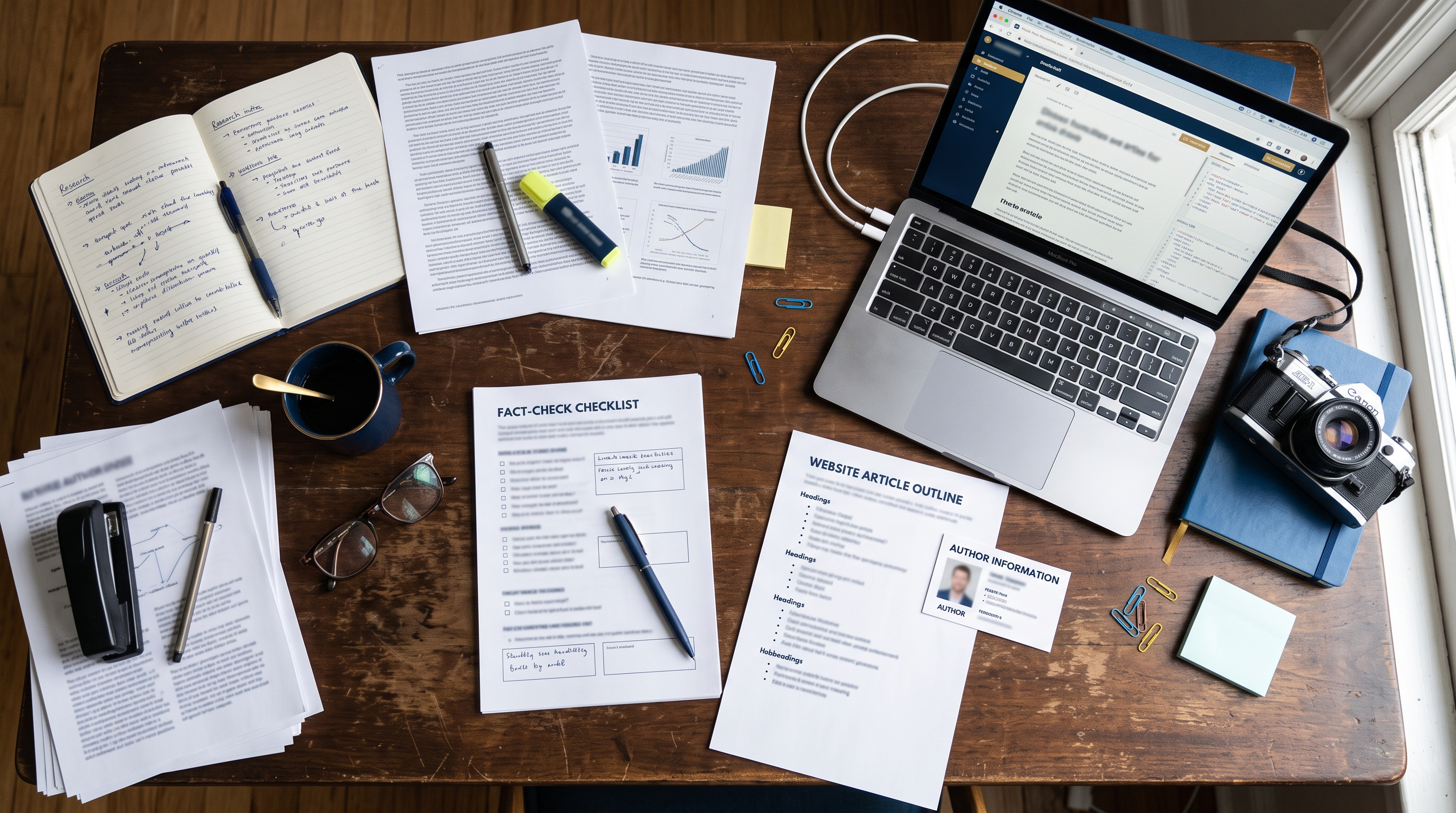
This image was created with AI for illustrative purposes.
The strongest improvement is evidence only the publisher can provide. For the Costa Rica route, that means explaining why I repeatedly choose the paved Bijagua route, what it adds to the trip and where I still tell readers to verify live conditions.
For each test page, I will check these elements:
- A direct two- or three-sentence answer near the beginning.
- A named author whose relevant experience is explained honestly.
- Firsthand photos, route notes, dates, screenshots or practical observations where available.
- Clear headings and comparison tables where they help a person make a decision.
- Primary or authoritative sources beside claims that need support.
- A visible updated date and an update log when the facts change.
- Article schema that describes what the reader can actually see.
- Descriptive image alt text and useful internal links.
This is also consistent with the way I use AI in my own publishing process. My five-stage AI partner workflow uses AI for structure and pressure-testing while the experience, stance and final decision stay with me.
Step Three: Use Fixed Prompts Instead of Fishing for a Win
AI answers can change with the platform, date, account context, location and wording. If I keep rewriting the question until my site appears, I am not measuring visibility. I am searching for a screenshot.
The test will use 12 prompts split into three groups:
Direct questions
Questions with a clear practical answer, such as whether an RV lithium battery can remain installed through a Canadian winter.
Decision questions
Questions that require tradeoffs, such as which route to Upala is most practical for a visitor who also wants to see Río Celeste.
Niche questions
Narrow questions tied to the experience and geography covered by the selected sites.
Example Prompts
- Can I leave LiFePO4 batteries in an RV over a Canadian winter?
- What should I inspect after a travel-trailer tire blowout?
- What is the most practical paved route from Liberia Airport to Upala?
- Should I travel through Bijagua on the way from Liberia to Upala?
- Can only one partner fish on a Costa Rica fishing-lodge trip?
Before the first run, I will lock the full list in the results sheet. The same wording will be used for the baseline and scheduled repeats.
The 28-Day Test Protocol
| Timing | Action | What gets recorded |
|---|---|---|
| Day 0 | Run the baseline and complete technical checks | Indexing, crawler access, exact prompts, citations, mentions and source accuracy |
| Day 1 | Repair confirmed technical barriers | Each change, its date and the affected URL |
| Day 7 | Repeat the locked prompts | Any changed citations without changing the content test yet |
| Day 14 | Publish the planned content improvements | Direct answers, evidence, sources, author context and schema changes |
| Day 28 | Run the final scheduled comparison | Citations, mentions, accuracy, referrals and limits of the result |
Search engines do not promise that a page will be crawled or reflected within these intervals. The schedule measures what is visible on those dates; it does not claim that every change has already been processed.
The Results Table I Will Update
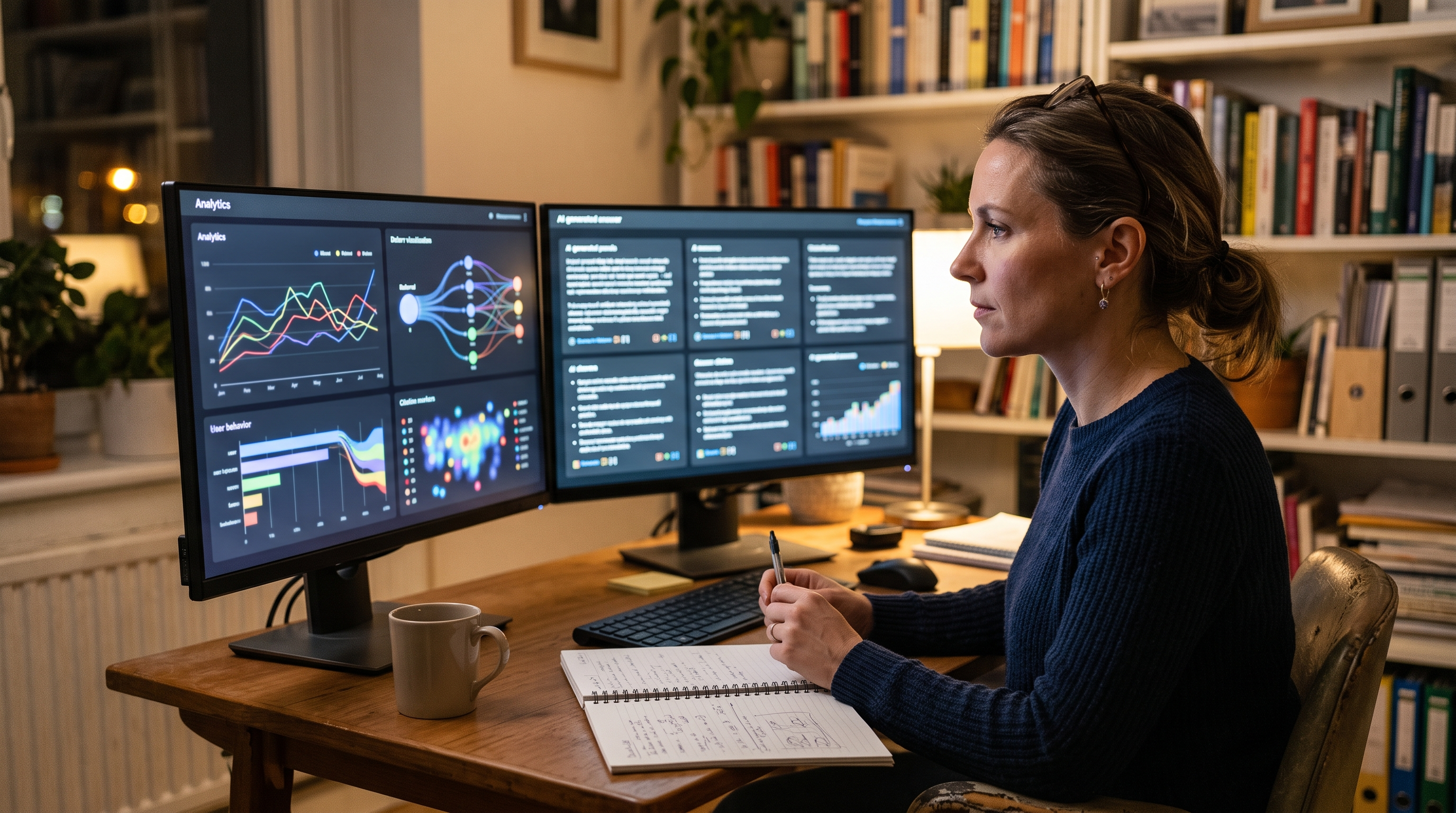
This image was created with AI for illustrative purposes.
| Date | Platform | Prompt ID | Brand mentioned? | URL cited? | Correct source? | Referral seen? |
|---|---|---|---|---|---|---|
| Baseline pending | ChatGPT Search | To be locked | Not tested | Not tested | Not tested | Not tested |
| Baseline pending | Google AI feature | To be locked | Not tested | Not tested | Not tested | Not tested |
| Baseline pending | Bing Copilot | To be locked | Not tested | Not tested | Not tested | Not tested |
I will not treat a citation count as a ranking position. Microsoft specifically explains that its Bing AI Performance metrics show citation activity, not a page’s placement, importance or authority inside an individual answer.
What I Am Deliberately Not Chasing
Google’s current generative-search guidance removes several tempting distractions. It says Google Search does not use llms.txt, does not require special AI markup and does not need content broken into tiny artificial chunks.
No fake certainty: adding FAQ schema does not guarantee an AI citation. Allowing OAI-SearchBot does not guarantee a ChatGPT citation. Publishing a better article does not guarantee that any system will choose it.
I am also avoiding:
- Publishing dozens of near-duplicate pages for every wording variation.
- Buying inauthentic mentions to imitate authority.
- Adding structured data that is not supported by visible content.
- Calling a brand mention a citation.
- Attributing a change to one edit when several variables changed.
- Equating citation visibility with affiliate revenue.
How I Will Decide Whether the Test Worked
The clearest success is simple: a test URL becomes a visible, accurate source for one or more locked prompts on a named platform. A secondary success is discovering and repairing a real technical barrier, even if a citation does not appear during the 28-day window.
A failed result would also be useful. If every page remains uncited, I can report that honestly, preserve the method and decide whether to extend the observation period. One small experiment cannot prove a universal formula, but it can stop me from repeating claims I have never tested.
This is the kind of work I want From 0 to 100K to document: not a polished answer from the finish line, but a test another beginner can inspect and repeat. The same principle runs through my guide to using AI agents without giving up human judgment.
Can an AI Citation Become a Customer?
A citation is only an introduction. If a visitor follows it and reaches a slow page, an outdated answer or a wall of affiliate buttons, the visibility accomplished very little.
The page still needs to solve the problem, show why the advice is trustworthy and offer a sensible next action. For an RV question, that could be a maintenance tool or troubleshooting guide. For a Costa Rica route, it could be lodge information, a transfer option or a fishing package. For this experiment, it is an invitation to follow the build rather than buy a guaranteed outcome that does not exist.
Wealthy Affiliate is the platform I use for website building, publishing, keyword research and parts of this workflow. It does not guarantee rankings or AI citations.
Methodology Limits
- This is a small observational test, not a controlled scientific study.
- AI answers can vary by date, platform, location, account context and feature availability.
- A change after an edit does not prove that the edit caused it.
- A citation does not guarantee traffic, conversions or affiliate income.
- Platform documentation and crawler behaviour can change after publication.
Frequently Asked Questions About AI Citations
Can a small website get cited by ChatGPT?
A small public website can be eligible for ChatGPT Search citations, but inclusion and placement are not guaranteed. The site must not block OAI-SearchBot if the publisher wants its content included in ChatGPT Search summaries and source links.
How do I allow ChatGPT Search to crawl my website?
Review the site’s robots.txt file and security settings to ensure OAI-SearchBot is not blocked. OpenAI also publishes the crawler’s user-agent details and IP ranges in its official crawler documentation.
Is GPTBot the same as OAI-SearchBot?
No. OpenAI documents OAI-SearchBot for surfacing websites in ChatGPT Search, while GPTBot relates to model training. A publisher can make separate decisions for the two crawlers.
Does Google require special AI schema?
No. Google says there is no special structured-data type required for AI Overviews or AI Mode. Structured data should continue to describe visible content accurately and may support ordinary rich-result eligibility.
Does an llms.txt file help Google AI Overviews?
Google says it does not use llms.txt for Search, including its generative AI features. Creating one for another service will neither help nor hurt Google visibility, but it is not a Google AI optimization requirement.
How can I track traffic from ChatGPT?
OpenAI says ChatGPT Search referral URLs include the UTM parameter utm_source=chatgpt.com. Publishers can look for that source in analytics, while recognizing that a citation may receive no click.
How can I see citations from Microsoft AI experiences?
Bing Webmaster Tools introduced an AI Performance report that shows supported citation totals, cited pages and sampled grounding queries. Those figures describe citation activity, not ranking position or importance.
Do question headings, FAQs and tables guarantee citations?
No. Clear structure can help readers and systems understand a page, but no individual format guarantees selection. The underlying answer still needs to be useful, accurate, accessible and relevant.
How long does it take to earn an AI citation?
There is no guaranteed timeline. Crawling, indexing, query demand and platform source selection all vary, so this test records dated observations instead of promising a fixed waiting period.
Official Sources
Final Thought
I want my small websites to be cited because they contain something worth attributing—not because I found a clever way to decorate ordinary information.
The experiment may work, partly work or go nowhere during the first 28 days. Whatever happens, the result will be published as a result, not rewritten as a promise.

Leave a Reply