
Last Updated on August 8, 2026 by Jeremy
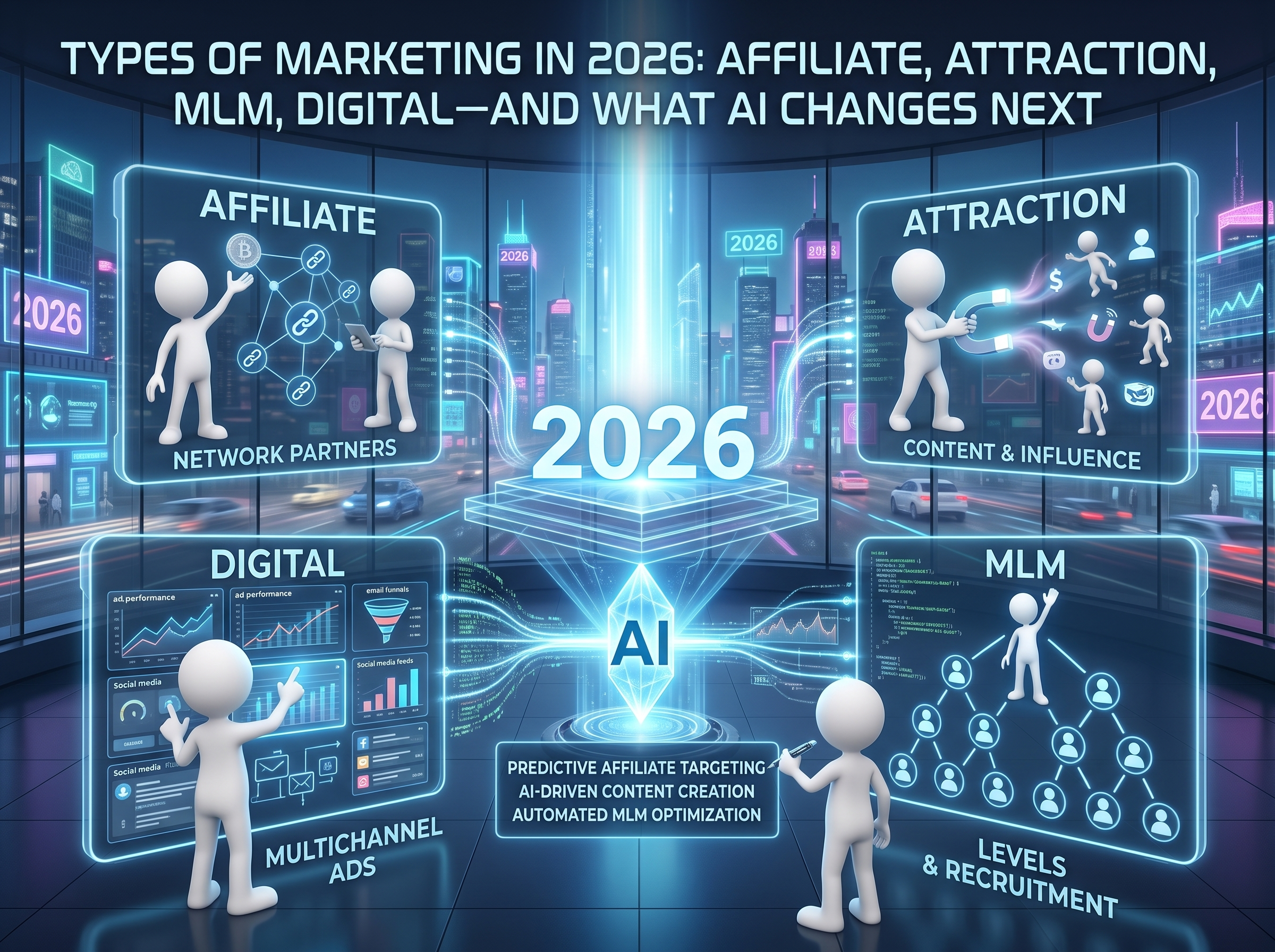
Affiliate marketing, attraction marketing, digital marketing and MLM are often compared as though they are four versions of the same thing. They are not. One describes how a commission is earned, another describes how attention is attracted, one is an enormous umbrella, and another is a compensation structure built around direct sales and participant networks.
That confusion causes people to choose tools before choosing a business. They open social accounts, buy advertising, join programs and generate content without deciding how money will move, who the customer is or which relationships they will actually own.
Quick Answer
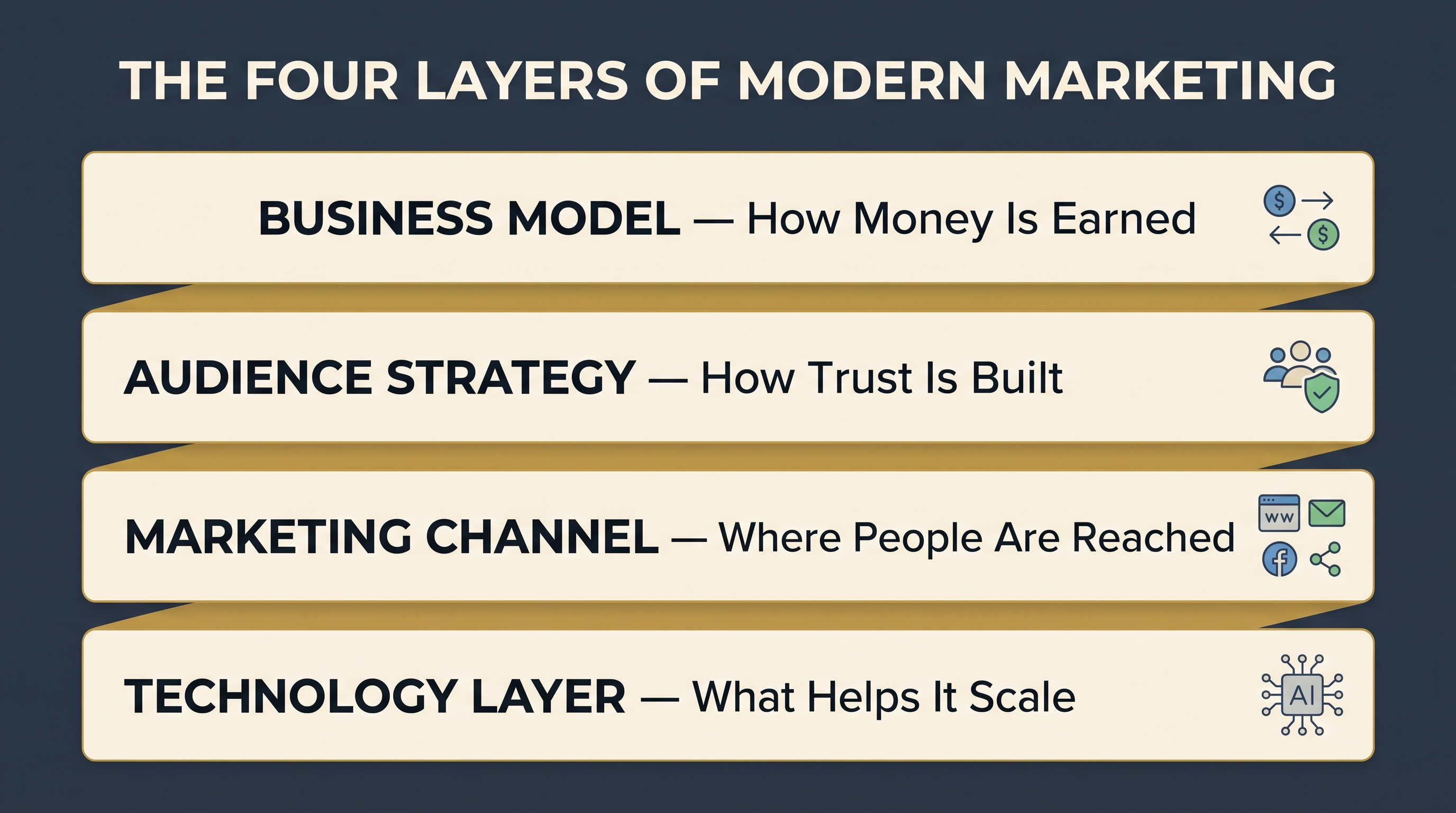
The main types of marketing in 2026 are easiest to understand in four layers:
- Business model: how revenue is earned.
- Audience strategy: how attention and trust are developed.
- Marketing channel: where people encounter the message.
- Technology layer: what helps research, create, measure and scale.
A successful strategy usually combines all four. For example, an affiliate publisher might use attraction marketing through helpful video and SEO content, capture readers through email, and use AI for research and personalization.
Why “Types of Marketing” Is So Confusing
Imagine someone asks, “Which is better: affiliate marketing, Instagram or attraction marketing?” The question compares a revenue arrangement, a platform and a strategy. It is like asking whether a pickup truck is better than a highway or a delivery business. They interact, but they do different jobs.
The distinction matters because each layer answers a different question:
- Business model: What event creates revenue?
- Audience strategy: Why would people notice or trust you?
- Channel: Where will the relationship begin and continue?
- Technology: What reduces time, improves decisions or increases scale?
Layer One: Business and Compensation Models
This layer determines who pays, what triggers payment and how dependent the marketer is on another company.
| Model | How money is earned | What you can own | Main dependency |
|---|---|---|---|
| Affiliate marketing | Tracked sale, lead, booking or action | Website, content, email list and audience | Merchant terms, attribution and commission |
| MLM/network marketing | Personal sales and, depending on the plan, network activity | Relationships and personal brand | Parent company, compensation plan and downline rules |
| E-commerce | Margin on products sold | Store, customer data and potentially the product | Supply, logistics, returns and acquisition costs |
| Lead generation | Qualified prospects delivered to a business | Lead assets, rankings and funnels | Lead quality, buyers and privacy rules |
| Creator sponsorship | Brand pays for access, content or influence | Audience, content library and personal brand | Platform reach, brand budgets and disclosure |
| Subscription | Recurring access fee | Product, community and customer relationship | Retention and continuing value |
| Service business | Payment for work, expertise or an outcome | Client list, reputation and process | Capacity, sales and delivery |
No model is automatically superior. Affiliate marketing lowers the burden of product delivery, but the merchant owns checkout. E-commerce offers more control but adds inventory and customer-service responsibility. Services can create revenue faster but are harder to detach from personal time.
How affiliate marketing works
An affiliate creates a useful bridge between a person’s problem and an outside solution. A tracking link identifies the referral. If the visitor completes an eligible action within the program’s rules, the affiliate earns a commission.
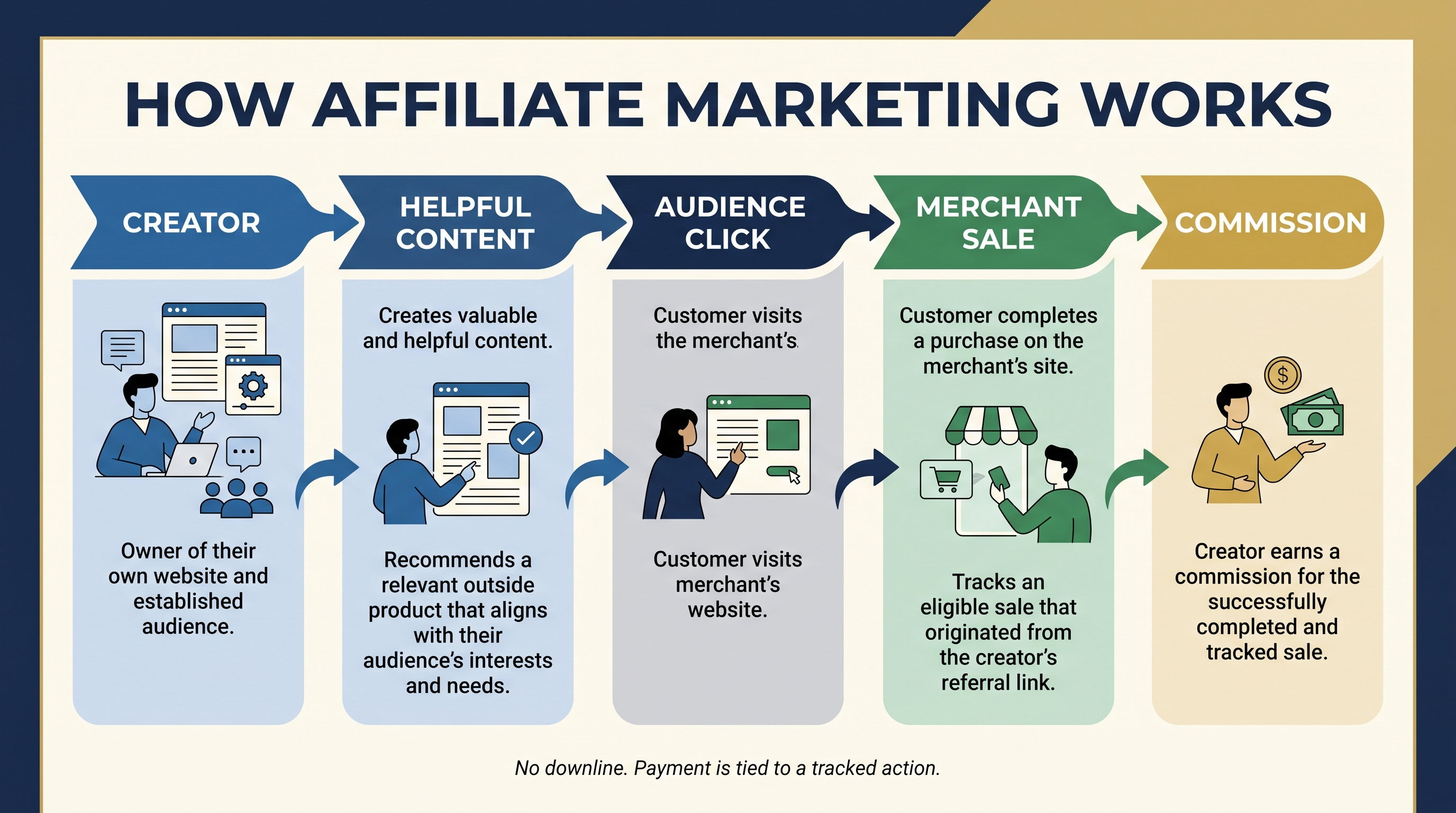
The durable asset is not the tracking link. It is the trust, content and audience that can survive when one merchant changes its program. That is why I place traffic, trust and conversion together when evaluating a profitable niche.
How MLM and network marketing work
Multi-level marketing is a form of direct selling in which participant compensation may combine personal retail sales with sales or activity generated through recruited participant levels. That network component separates it from ordinary affiliate marketing.
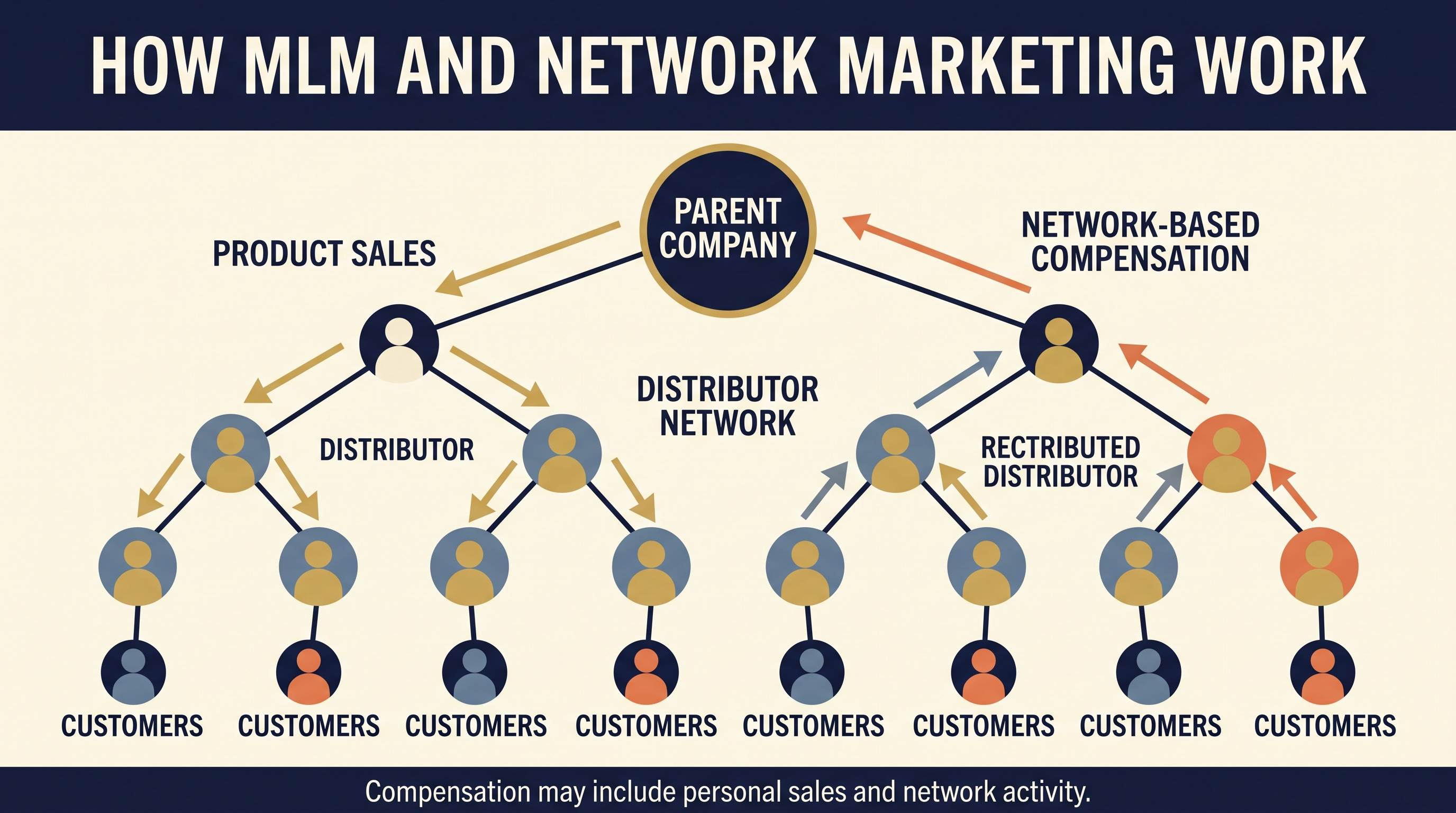
Affiliate Marketing Versus MLM
| Question | Affiliate marketing | MLM/network marketing |
|---|---|---|
| What normally triggers payment? | A tracked customer action | Personal sales plus possible network activity |
| Is recruitment required? | Usually no | Often important to larger compensation plans |
| Can multiple brands be promoted? | Commonly yes | Often restricted or centred on one company |
| Who handles the product? | The merchant | The parent company and/or distributor |
| What survives if the company closes? | An independently owned audience and content may survive | Network compensation and product access may disappear |
| Main risk | Traffic, attribution and merchant dependence | Expenses, recruitment pressure and company dependence |
The fair comparison is not “affiliate good, MLM bad.” It is ownership, costs, customer value, compensation transparency and whether the opportunity still makes sense without recruitment.
Layer Two: Audience-Building Strategies
Attraction marketing
Create enough relevance, usefulness or personality that people choose to approach. Education, storytelling, search content and demonstrations can all support it.
Inbound marketing
Help prospects discover answers through content, search, downloads and nurturing rather than interrupting them cold.
Outbound marketing
Initiate contact through advertising, outreach, sales calls or direct messages. It can work quickly, but poor targeting becomes noise.
Relationship marketing
Increase trust and retention through useful follow-up, customer service, transparency and consistent communication.
Community-led marketing
Build participation between customers, creators and experts so the group produces value beyond one-directional promotion.
Referral marketing
Encourage satisfied people to introduce others. The referral may be unpaid, rewarded or managed through a formal partner program.
Attraction marketing is especially misunderstood. It is not “post motivational quotes and wait.” It works only when the material attracts the right person toward a relevant next step.
Layer Three: Marketing Channels
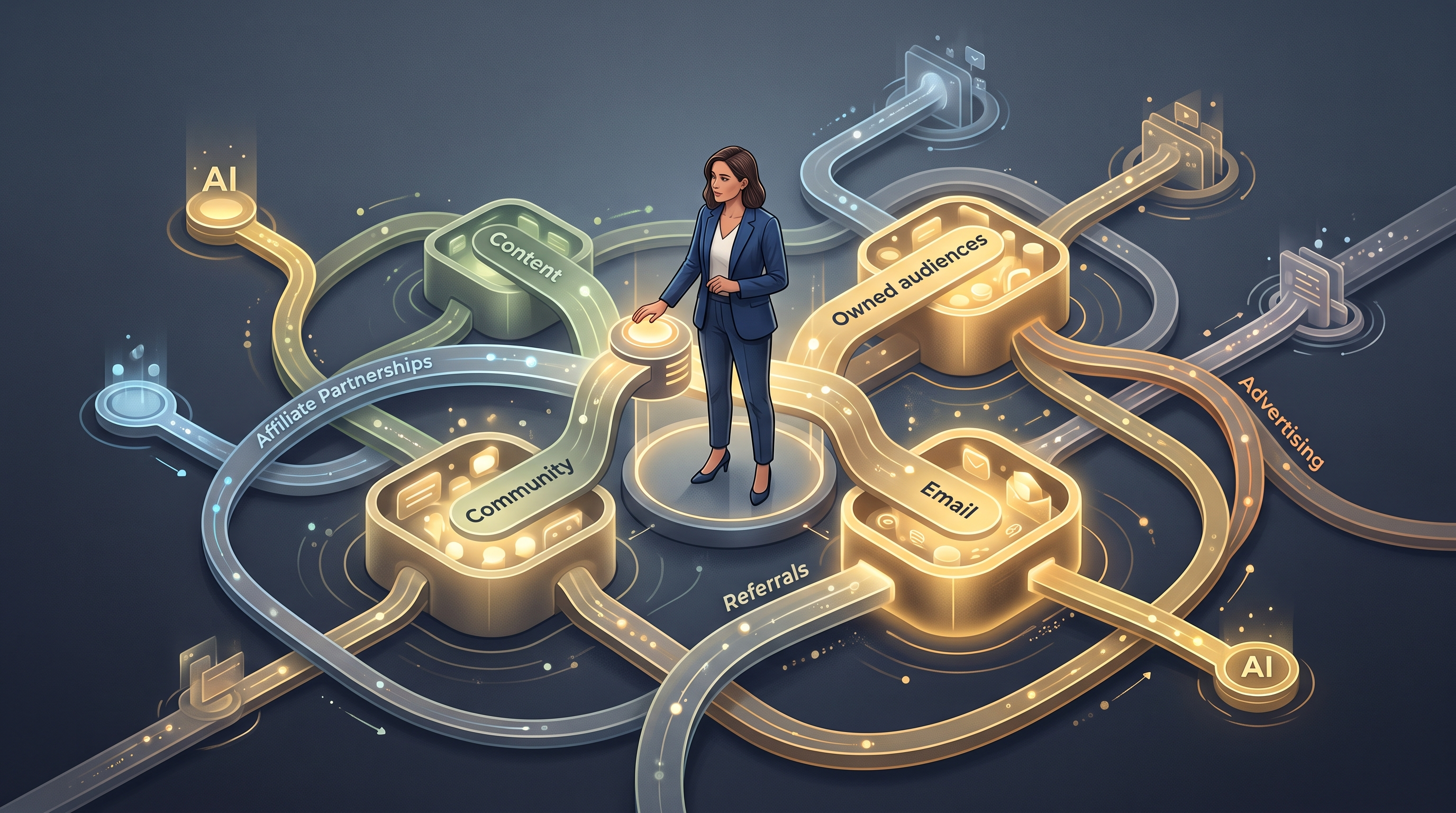
Channels are the places where messages travel. A business can use several without changing its underlying model.
- Search and SEO: capture active questions and buying research.
- Content: educate, demonstrate expertise and create reusable assets.
- Email: continue a relationship without depending on an algorithmic feed.
- Social media: gain reach, conversation and cultural relevance.
- Video and podcasts: build familiarity, demonstrate and explain.
- Paid media: purchase distribution through search, social, display, video or sponsorship.
- Influencers and creators: borrow trusted access to a defined audience.
- Events: create live experience and higher-context relationships.
- AI discovery: appear as a cited or recommended source inside conversational answers.
How Marketing Reached This Point
Traditional media did not vanish when websites arrived. Websites did not vanish when social media arrived. Each layer changed the economics and added new ways to discover, persuade and measure.
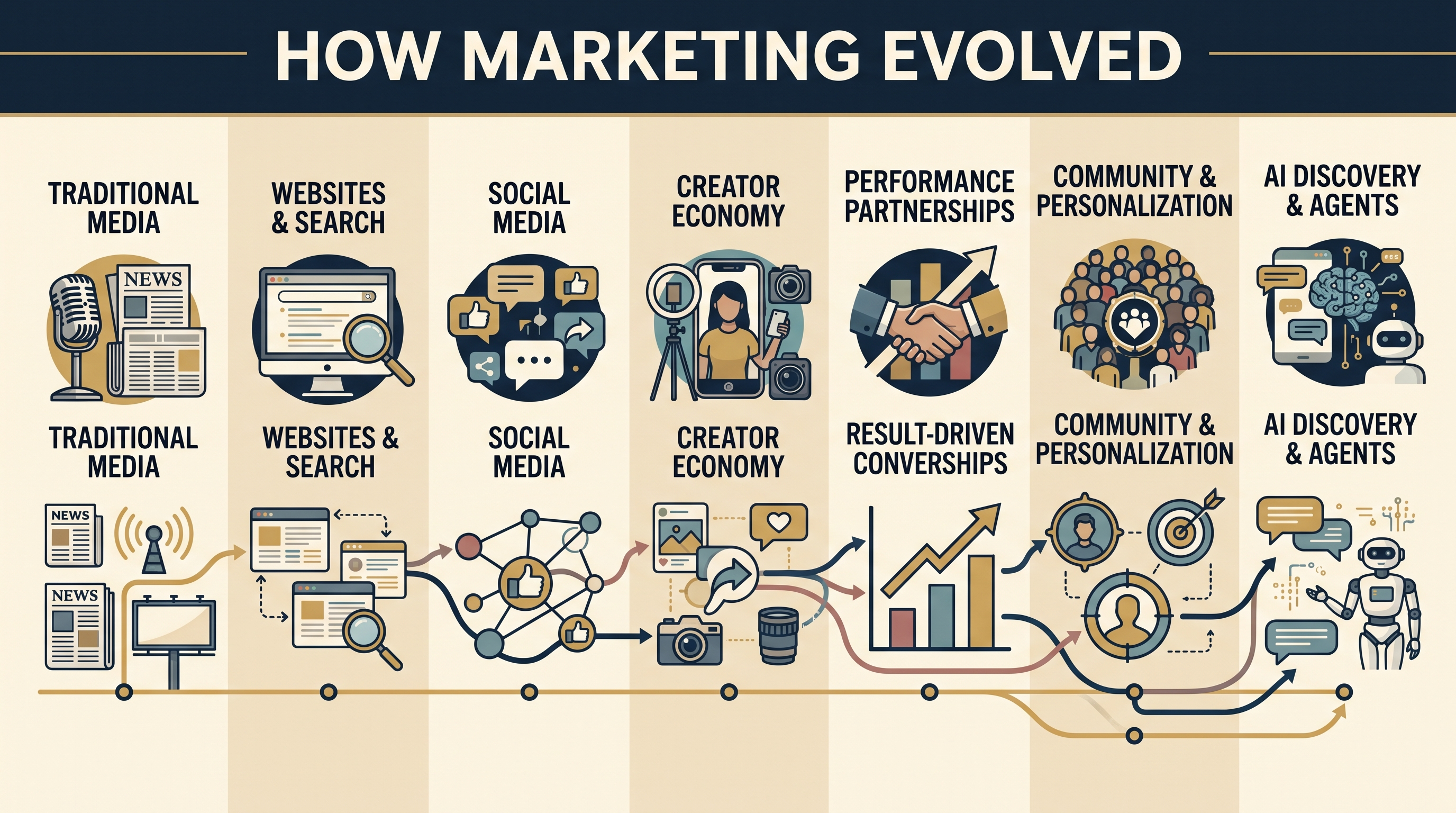
In 2026, creator marketing is no longer experimental. IAB projects U.S. creator advertising at $44 billion for 2026, while U.S. digital video ad spending is projected to exceed $80 billion. Those forecasts do not guarantee that every influencer or video creator succeeds. They indicate where brand investment is moving.
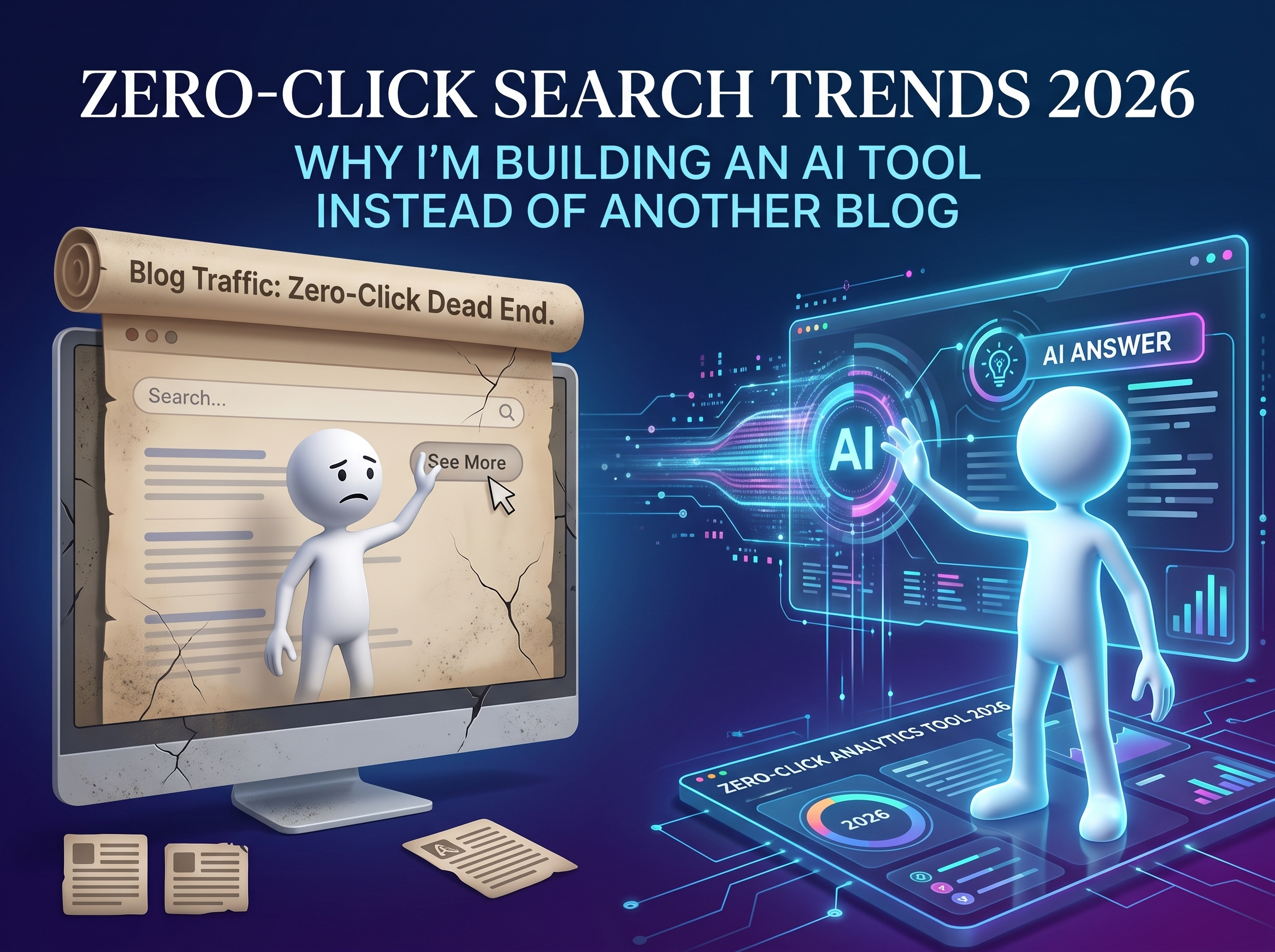
Search is changing too. Google introduced dedicated generative-AI performance reporting for selected Search Console properties, covering visibility in features such as AI Overviews and AI Mode. That makes conversational discovery measurable enough to treat as a developing channel. It also reinforces why I am building an AI tool instead of relying only on another blog.
Owned Audiences Versus Rented Audiences
A social following, marketplace profile or search ranking can create tremendous reach. The problem is control. Access can shrink when algorithms, accounts, policies or fees change.
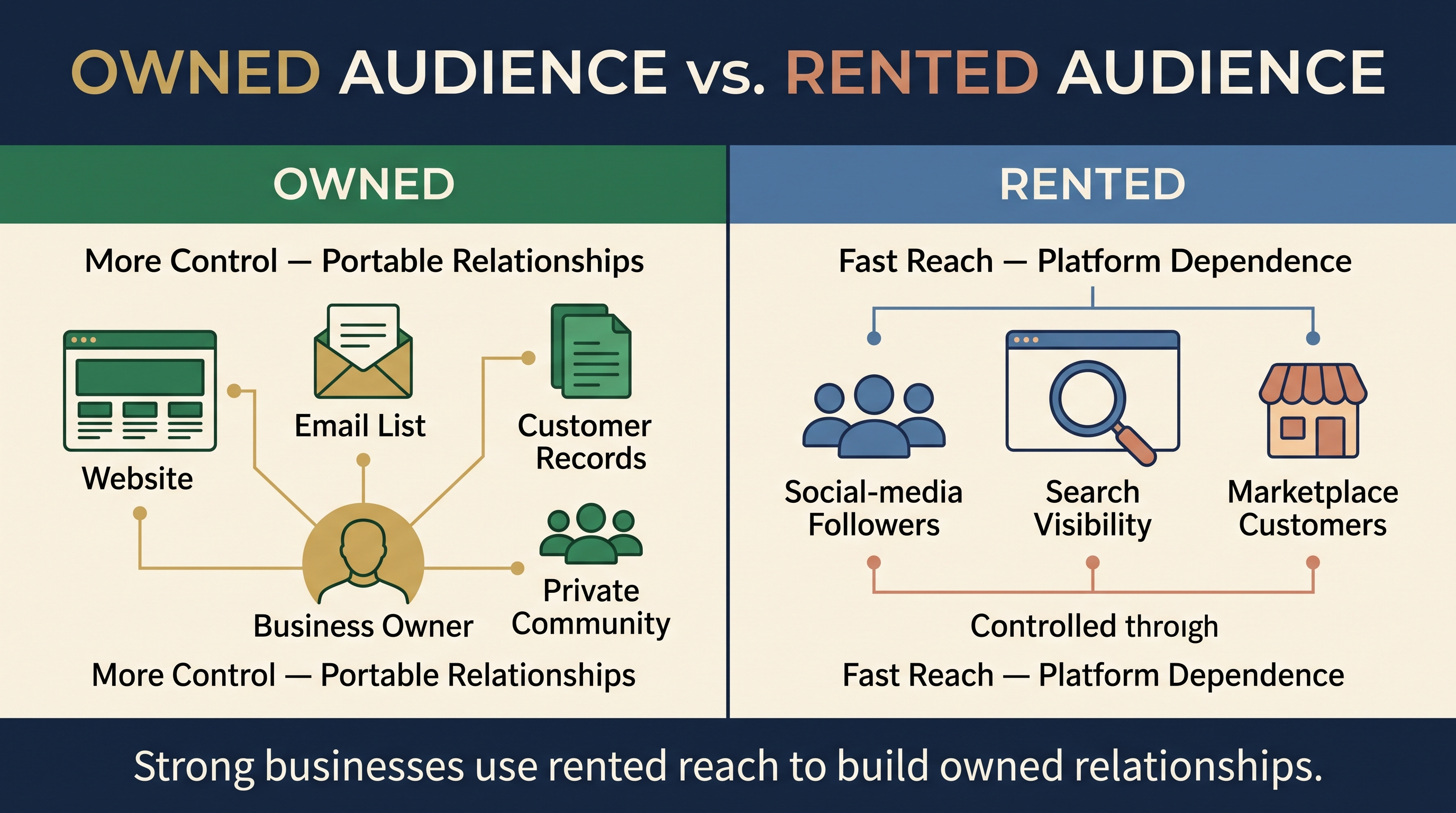
An owned audience is not perfectly owned either. Email providers have rules, domains can be attacked and laws govern customer data. The point is relative control. A website, permission-based email list and direct customer relationship are usually more portable than followers trapped inside one feed.
Layer Four: What AI Changes
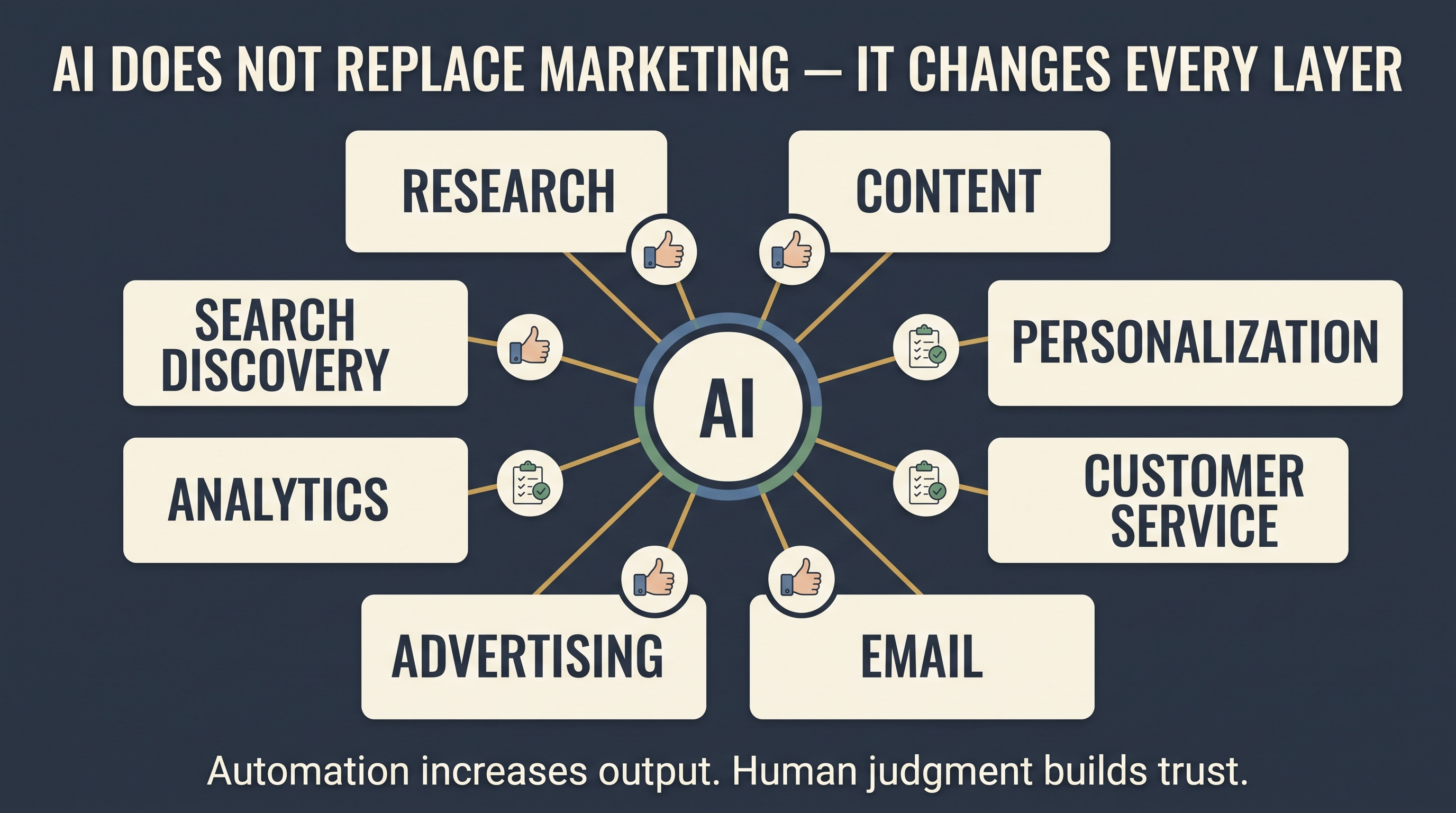
AI is not a separate replacement for marketing. It is becoming a capability across every layer:
- Researching audiences and questions
- Planning and adapting content
- Personalizing email and offers
- Qualifying leads and answering customers
- Testing creative variations
- Summarizing analytics and detecting patterns
- Powering conversational search and recommendations
- Allowing agents to perform tasks rather than merely give advice
Google’s current guidance does not say that all AI-assisted content is automatically bad. It emphasizes helpful, reliable, people-first work, firsthand knowledge and clarity about automation when readers would reasonably want context.
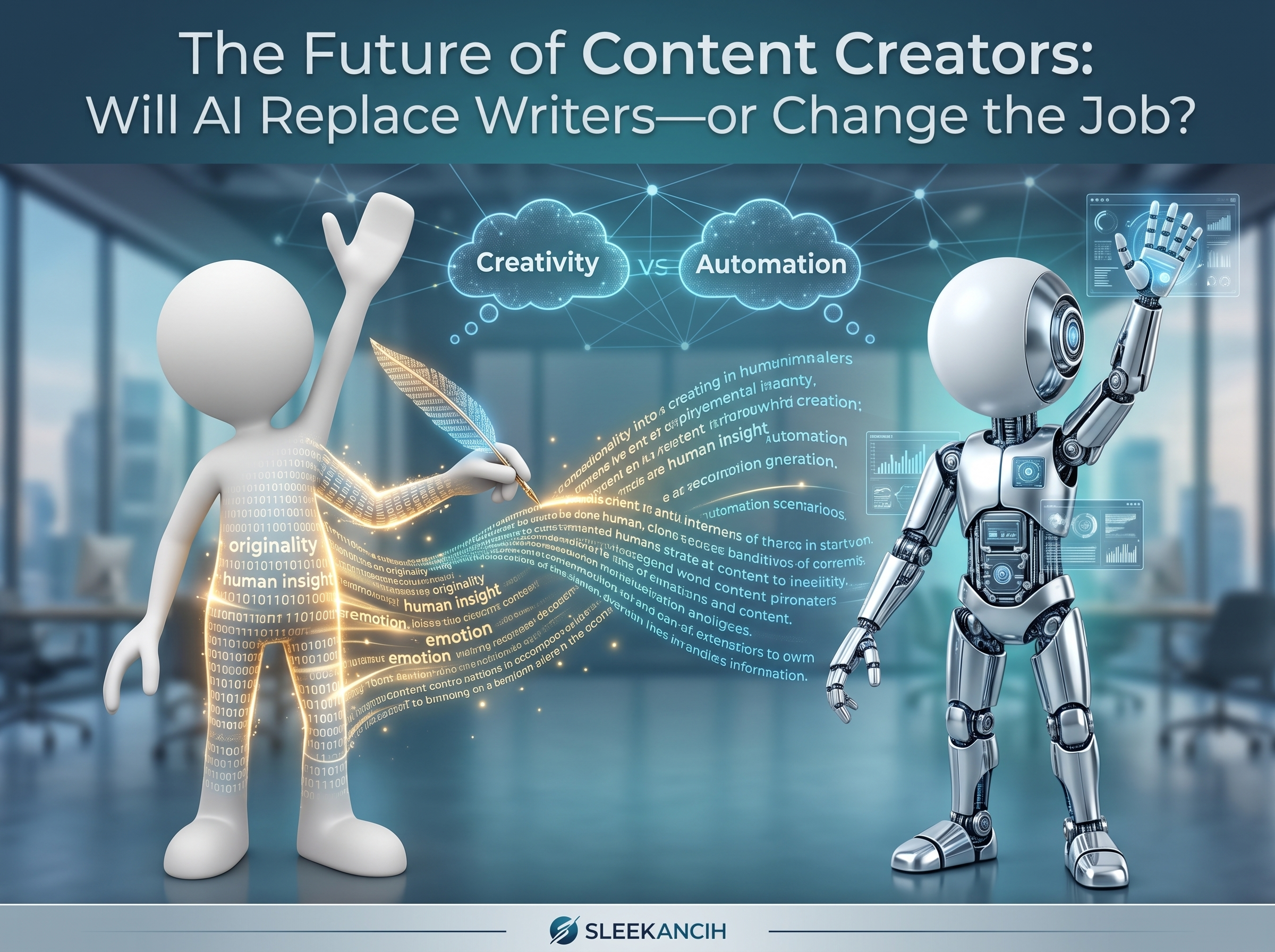
That creates a paradox: AI makes generic content cheaper while making real experience more valuable. The marketer who merely generates more words becomes easier to replace. The marketer who can test, document, interpret and take responsibility becomes harder to replace.
Want the practical AI-agent explanation?
See how software is moving from answering questions to completing tasks.
Which Marketing Styles Look Strongest Through 2030?
No forecast deserves certainty. My assessment is based on ownership, measurable outcomes, market investment, adaptability and whether the approach becomes more or less valuable as automated content expands.
| Approach | Outlook | Why | Main weakness |
|---|---|---|---|
| Trust-led content | Strong | Original evidence becomes scarcer as generic production rises | Slow and difficult to scale authentically |
| Email and owned community | Strong | Direct, permission-based relationship | Requires continued relevance and responsible data use |
| Creator and influencer partnerships | Growing | Brand investment and audience trust | Measurement, disclosure and platform dependence |
| Digital video | Growing | Demonstration, personality and broad distribution | Production demands and crowded feeds |
| Affiliate partnerships | Durable | Payment connected to measurable outcomes | Attribution and merchant control |
| AI personalization and service | Growing | Faster response and better matching at scale | Privacy, errors and impersonal automation |
| Generic mass SEO content | Vulnerable | Cheap to produce and easy to imitate | Weak differentiation and zero-click answers |
| Single-platform dependence | Fragile | Can grow quickly | Algorithm, policy and account risk |
| Recruitment-led opportunities with weak products | High risk | May create short-term momentum | Regulatory, reputation and retention pressure |
How to Choose a Marketing Strategy
Do not begin by asking which platform is popular. Start with what already exists and what the business needs.
- Define the revenue event. Sale, lead, subscription, booking, referral or service agreement?
- Identify the audience problem. What creates enough urgency to seek help?
- Choose the trust strategy. Education, demonstration, community, outreach or referral?
- Select two primary channels. One for discovery and one for continuing the relationship.
- Choose an owned destination. Website, email list, customer record or community.
- Add technology last. Automate a process only after understanding it.
- Measure the entire path. Reach without conversion and conversion without profit are incomplete victories.
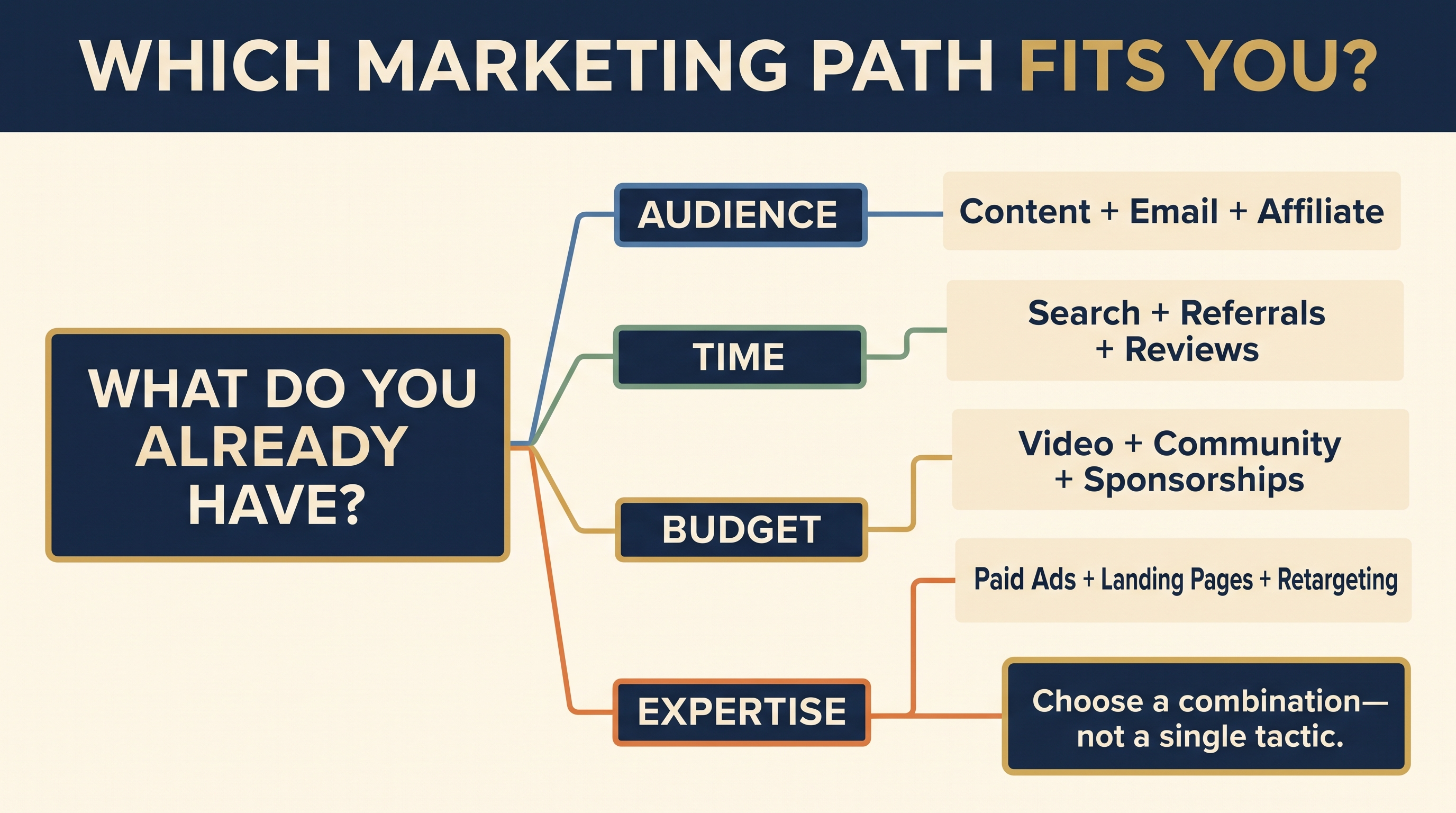
New affiliate creator
Helpful content + search or video + email + aligned affiliate offers.
Local service business
Local search + reviews + referrals + before-and-after evidence.
E-commerce brand
Creator partnerships + email + paid retargeting + customer advocacy.
Consultant or expert
Attraction content + professional network + email + discovery calls.
The Bottom Line
The future is not affiliate marketing versus attraction marketing versus AI. A modern business may use all three: affiliate marketing as the revenue model, attraction marketing as the trust strategy and AI as the technology layer.
The strongest long-term combination is likely to remain remarkably human: solve a real problem, provide evidence, communicate clearly, earn permission to continue the relationship and make the next step useful. AI can accelerate every part of that process. It cannot make a weak promise trustworthy.
Want to learn how I built the underlying skills?
My updated review explains what Wealthy Affiliate taught me, what I paid and where the platform stops.
Frequently Asked Questions
What are the main types of marketing in 2026?
Major strategies include attraction, inbound, outbound, relationship, community and referral marketing. Common channels include search, content, email, social media, video, paid media, creators and AI discovery. Affiliate, e-commerce, subscription and MLM describe business or compensation models rather than channels.
Is affiliate marketing the same as MLM?
No. Affiliate marketing normally pays for a tracked customer action and does not require recruitment. MLM compensation may include personal sales and activity generated through recruited participant levels.
Is attraction marketing a business model?
No. Attraction marketing is a strategy for drawing suitable people through relevance, education, usefulness or personality. It can support affiliate, service, e-commerce and other business models.
Will AI replace digital marketers?
AI will automate and accelerate many research, creation, service and analysis tasks. Marketers remain responsible for strategy, evidence, ethical claims, customer understanding and final decisions.
Which marketing method is best for a beginner?
A beginner should choose a simple combination that matches available time and budget. Helpful content, one discovery channel, an owned website or email list and one clear revenue model is usually more manageable than trying every platform.
Sources
- IAB Creator Economy Ad Spend & Strategy Report
- IAB 2026 Digital Video Ad Spend Report
- FTC Business Guidance Concerning Multi-Level Marketing
- FTC Endorsement and Disclosure Guidance
- Google: Creating Helpful, Reliable, People-First Content
- Google Search Generative AI Performance Reports
Future outlook sections are the author’s reasoned assessment based on the cited market, regulatory and platform evidence—not guaranteed forecasts.

Leave a Reply