
Last Updated on May 18, 2026 by Jeremy

Affiliate disclosure: This article includes affiliate links. If you click through and make a purchase or sign up, I may earn a commission at no extra cost to you. That is also the whole point of this article: clear, normal, non-weird transparency.

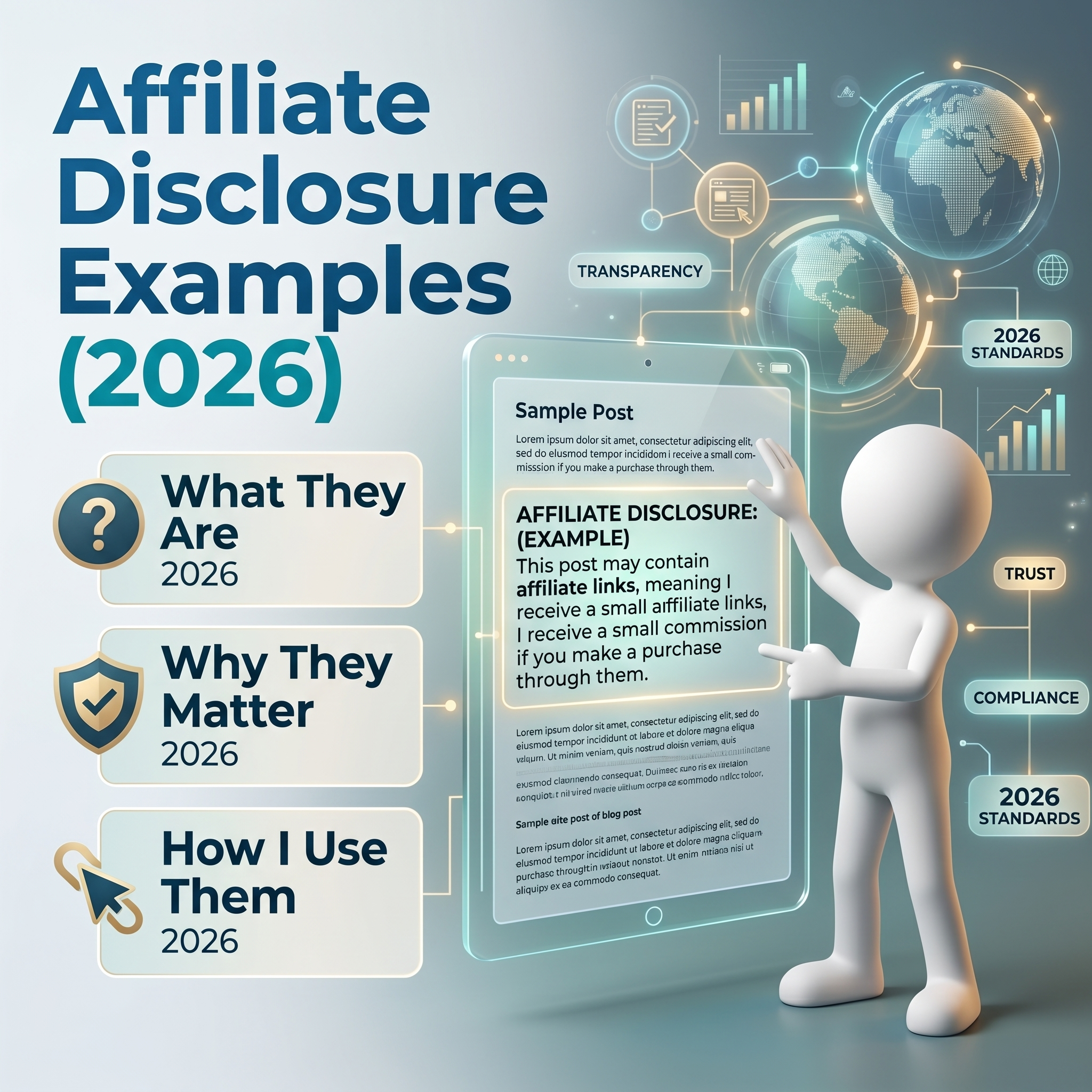
Affiliate disclosures are not supposed to scare people away. If anything, they should do the opposite. They tell readers, viewers, and followers that you are being upfront about how your content may earn money.
Quick Answer: What Is an Affiliate Disclosure?
An affiliate disclosure is a short statement that tells people you may earn a commission if they click your link and buy something, sign up, or take another qualifying action.
- Use it when: you share affiliate links, referral links, sponsored recommendations, or paid partnerships.
- Place it where: people can see it before or near the affiliate link.
- Write it how: clear, simple, and easy to understand.
- Big mistake: hiding it in tiny footer text and pretending that counts.
Why Affiliate Disclosures Matter More Than People Think
There is a weird fear around affiliate disclosures, especially with beginners. Some people feel like saying “I may earn a commission” makes them look less trustworthy.
I see it the opposite way.
If someone recommends a tool, product, course, platform, hosting company, app, or service, I would rather know how the relationship works. Are they a customer? An affiliate? A sponsor? A random person repeating something from page one of Google?
Transparency clears the fog.
And in affiliate marketing, fog is where trust goes to die.
The Simple Rule I Use
If I might earn money from a link, I disclose it.
That is it. No gymnastics. No trying to hide it in a footer. No “partner ecosystem monetization relationship” wording that sounds like it came from a legal department locked in a broom closet.
For my own content, I usually want the disclosure near the top of the article or close to the first affiliate link. That way readers know what is going on before they click.
What Counts as an Affiliate Relationship?
Usually Needs Disclosure
- Affiliate links
- Referral links
- Sponsored content
- Free products in exchange for coverage
- Discount codes that track commissions
- Brand ambassador partnerships
Still Worth Being Clear About
- Personal recommendations
- Tools you use and earn from
- Software reviews
- Product roundups
- YouTube descriptions
- Social media posts with links
Affiliate Disclosure Examples You Can Copy and Use
Use these as starting points. Adjust them to your own voice, niche, and platform. The goal is not to sound like a lawyer. The goal is to be clear.
Affiliate Disclosure Examples for Social Media
Social media is where people often mess this up. A disclosure buried under 21 hashtags is not exactly clear. Keep it visible and simple.
Affiliate Disclosure Examples for YouTube
YouTube needs disclosure in the video and in the description when affiliate links are involved. The description is not a junk drawer. Put the disclosure before or near the links.
Affiliate Disclosure Examples for Email
Email is easy to overlook because it feels more private. But if you are sending a recommendation that includes an affiliate link, disclose it there too.
Bad Affiliate Disclosure Examples
Now for the stuff that makes disclosures useless. This is where people try to be clever, but clever is not the goal. Clear is the goal.
| Bad Example | Why It Fails | Better Version |
|---|---|---|
| Links may be monetized. | Too vague. Most readers will not know what that means. | I may earn a commission if you buy through links on this page. |
| Partner links included. | Still vague. Partner could mean anything. | This post contains affiliate links, which means I may earn a commission. |
| Disclosure hidden only in footer. | Readers may never see it before clicking. | Add a short disclosure near the top of the post or near the first affiliate link. |
| #affiliate buried after 20 hashtags. | Not clear enough for normal readers. | Affiliate link: I may earn a commission if you buy through my link. |
My Personal Approach on From 0 to 100K
From 0 to 100K is built around public learning, testing, and documenting the process. That means affiliate links are part of the model.
I review tools. I talk about platforms. I compare systems. I share what I am building, what I am testing, what I like, and sometimes what I would avoid.
So when I use affiliate links, I want that to be obvious. Not awkward. Not buried. Not dressed up in weird wording.
Affiliate marketing works better when people trust the recommendation. And trust is not built by hiding the money part. It is built by explaining it clearly and then making recommendations that do not suck.
Where Should You Place an Affiliate Disclosure?
The safest habit is to make the disclosure visible before someone clicks an affiliate link. That usually means near the top of the article, near the first affiliate link, or directly in the section where the recommendation happens.
Blog Posts
Place it near the intro or before the first affiliate link.
Reviews
Put it before the review gets into recommendations or buttons.
Social Posts
Add it directly in the caption, not hidden after a pile of hashtags.
YouTube
Say it in the video and include it near links in the description.
Add it before or near the affiliate recommendation.
Resource Pages
Include a clear note near the top of the page.
A Simple Affiliate Disclosure Template for Your Website
If you need a simple starter version for a website page, you can use something like this:
This does not replace legal advice, but it gives you a plain-English starting point. You can adjust it to match your site, your niche, and your actual affiliate relationships.
Want a Walkthrough on Affiliate Links and Disclaimers?
Inside Wealthy Affiliate, there is a training lesson that walks through affiliate links, disclosure pages, and in-page disclaimers. That is a good next step if you are still learning how affiliate links actually work inside a real website build.
The big lesson is simple: do not just learn how to grab affiliate links. Learn how to use them properly.
Affiliate Disclosure FAQ
Do I need an affiliate disclosure on every blog post?
If the blog post includes affiliate links, yes, you should include a clear disclosure in that post.
Can I just have one affiliate disclosure page on my website?
A standalone disclosure page is useful, but it is not enough by itself if readers do not see the disclosure before clicking affiliate links. In-page disclosures are important too.
Where should I put my affiliate disclosure?
Put it near the top of the article, near the first affiliate link, or directly beside the recommendation. The reader should not have to hunt for it.
Do social media posts need affiliate disclosures?
Yes, if you are sharing affiliate links or paid recommendations on social media, disclose the relationship clearly in the post or caption.
Does an affiliate disclosure hurt conversions?
In my opinion, a clear disclosure can actually help trust. Bad recommendations hurt conversions more than honesty does.
Can I copy the examples in this article?
Yes. Use them as starting points and adjust the wording to fit your voice, platform, and niche.




Leave a Reply