

Last Updated on December 24, 2025 by Jeremy
Starting a YouTube channel for affiliate marketing feels deceptively simple. Most people picture the same three steps: you open an account, you hit record, and you toss a couple links in the description. That’s the clean version. It’s also the version that quietly burns people out, because it skips the part where motivation fades after a few uploads and “doing everything right” still doesn’t lead to results early on.
This article isn’t here to sell you on YouTube. I’m not going to promise fast money, pretend the algorithm is your buddy, or act like you’ll wake up next month to passive income raining from the sky. This is here for one reason: to help you start without wasting your first six months chasing the wrong signals.
Why YouTube Is Harder Than It Looks (and Easier Than People Make It)
YouTube isn’t saturated. Attention is. That’s not a motivational quote, it’s the reality of 2026 content. There are more creators, more channels, more “how to” videos, and more noise than ever. So the people who win aren’t necessarily the ones with the best camera or the cleanest edits. The people who win are the ones who show up consistently, explain things clearly, and stick around long enough for trust to build.
Most beginners don’t fail because they’re bad on camera. They fail because they walk in with expectations that don’t match how YouTube actually works. They expect quick feedback, fast validation, and early monetization. Meanwhile YouTube quietly rewards consistency, clarity, and patience. If you understand that upfront, you’ve already avoided one of the most common reasons people quit.

When Should You Start a YouTube Channel for Affiliate Marketing?
The honest answer is earlier than you think. If you wait until you feel ready, you’ll keep collecting “prep work” instead of experience. Confidence doesn’t show up first. Confidence is what happens after you’ve published enough videos to realize that you didn’t die, the world didn’t end, and you can improve one small piece each time.
You don’t need a perfect niche map, a content calendar that looks like a NASA launch schedule, professional lighting, or advanced editing skills. What you do need is the willingness to show up imperfectly, realistic timelines, and enough curiosity to keep learning after video #5 flops. Because yes, one of your early videos will flop. Probably several. That’s part of the job.
Waiting for confidence usually means waiting forever. Momentum comes from action, not preparation.
What to Know Before Starting a YouTube Affiliate Channel
This is the part most tutorials skip because it isn’t flashy, and it doesn’t sell course bundles. But this is the truth that keeps you from sabotaging yourself.
1) Videos don’t sell. Trust does.
Early videos rarely convert. Not because your content is doomed, and not because affiliate marketing “doesn’t work anymore.” It’s because trust hasn’t been earned yet. People don’t click because you placed a link. They click because you explained something clearly and they believe you’re not wasting their time.
2) Monetization lags behind visibility.
Getting views is one skill. Getting clicks is another. Getting conversions is a third. And most beginners try to skip straight to the conversion stage before they’ve even built the foundation. That’s like putting a “for sale” sign on a house you haven’t finished building.
3) The delay is normal.
If your first videos don’t make money, nothing is broken. That’s the process working as intended. The learning phase is real, and it’s unavoidable. People who quit here weren’t prepared for how skill-heavy the early stage is.
How Monetization Actually Works on YouTube (Without the Myths)
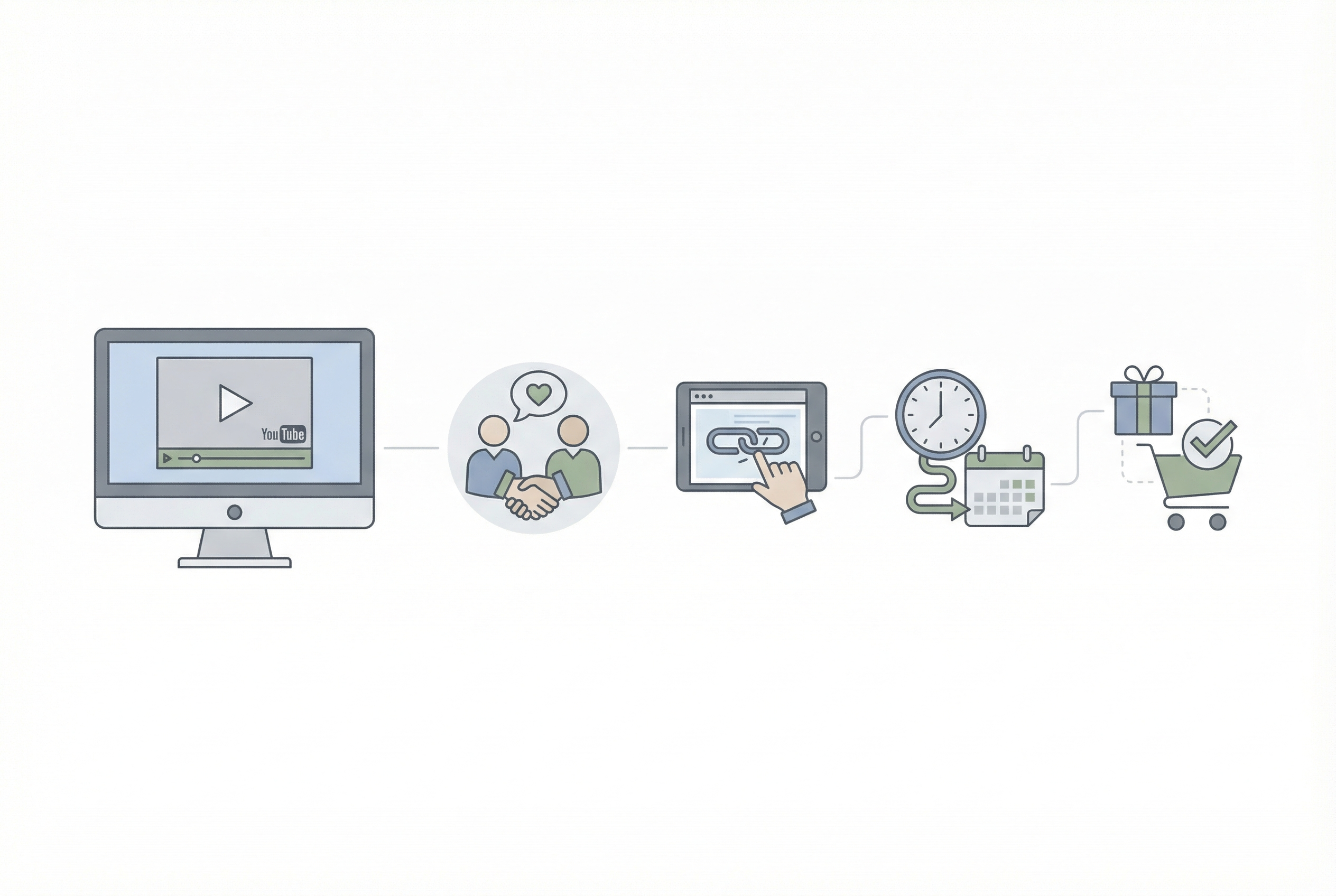
Affiliate marketing on YouTube doesn’t work like ads make it seem. There’s no straight line from upload to link to income. What actually happens is slower and far more predictable. Someone discovers a video, then they watch more than one. They start trusting your explanations. They click when they’re ready. And most of the time, the conversion happens somewhere off YouTube.
YouTube is the discovery layer, not the business itself. Once you understand that, everything becomes less frustrating because you stop judging your progress by the wrong scoreboard.
Where Affiliate Programs Fit In (and Why This Comes Later)
A common beginner mistake is hunting for affiliate programs too early. Links don’t fix unclear messaging, weak content, or a channel that doesn’t know who it’s actually trying to help. Links amplify what’s already there. That’s why skill-building matters before monetization. You need content skills, basic SEO understanding, audience awareness, and realistic timelines.
This is where a structured learning environment matters. I personally build inside Wealthy Affiliate, not because it promises speed, but because it teaches fundamentals without pretending shortcuts exist. If you want the deep breakdown, here’s my full review: Wealthy Affiliate Review – The Real Story for Beginners Who Want Digital Skills That Pay.
If you already know you want to explore Wealthy Affiliate, here’s my tracked link. No pressure, just the same path I’m using.
Explore Wealthy Affiliate
The Mistakes That Kill Channels Before They Start
Most YouTube affiliate channels don’t fail dramatically. They fade out quietly. Usually because the creator is copying large creators without context, chasing trends before understanding basics, expecting income from the first few videos, or constantly switching direction. None of these mean you’re bad at this. They mean expectations weren’t aligned with reality.
What to Focus on for Your First 30–60 Days
If you’re just starting, keep it simple. Your job is to publish consistently and get clearer over time. Focus on explaining one problem clearly per video, learning how viewers respond, and improving slightly each upload. Ignore subscriber counts, income comparisons, and viral fantasies. Progress at this stage is often invisible, but it compounds.
Momentum Beats Perfection (If You’re Honest About the Process)
You don’t need the perfect setup. You need reps. I’ve seen creators start with a phone, basic editing, and zero confidence. Some gained traction faster than expected. Most didn’t. The difference wasn’t talent. It was showing up anyway. Starting doesn’t guarantee success, but waiting almost guarantees nothing happens.
This idea of starting before everything is perfect isn’t unique to me. Inside Wealthy Affiliate, you’ll see creators like Eric Cantu openly talk about how momentum mattered more than gear, polish, or waiting for confidence.
His message wasn’t that YouTube is easy or that money shows up overnight. It was that most people overestimate how “ready” they need to be and underestimate how much clarity comes from simply publishing and adjusting in public.
That distinction matters. Starting early doesn’t guarantee success. Waiting almost guarantees you never collect the reps required to improve.
If you’re curious, this is the original post that sparked that conversation: Here’s All You Need to Get Started on YouTube (Eric Cantu)
Read it for the mindset, not the headline.

Final Thought: Starting Is the Point
Starting a YouTube channel for affiliate marketing isn’t about making thousands. It’s about building leverage slowly, intentionally, and honestly. If you go in expecting instant results, you’ll burn out. If you go in expecting to learn, you’ll last long enough to see progress. That’s the real starting line.
If you’re the type who would rather build a real foundation than chase tricks, Wealthy Affiliate is the learning environment I use. It keeps everything in one place so you’re not duct-taping random tools together while trying to “stay motivated.”
Explore Wealthy Affiliate





Leave a Reply