
Last Updated on February 14, 2026 by Jeremy
If you’re new here, start with the roadmap: Start Here: Your Path From 0 to 100K. This post is for the moment when you’ve already started… and now you’re staring at performance numbers wondering why they aren’t moving.

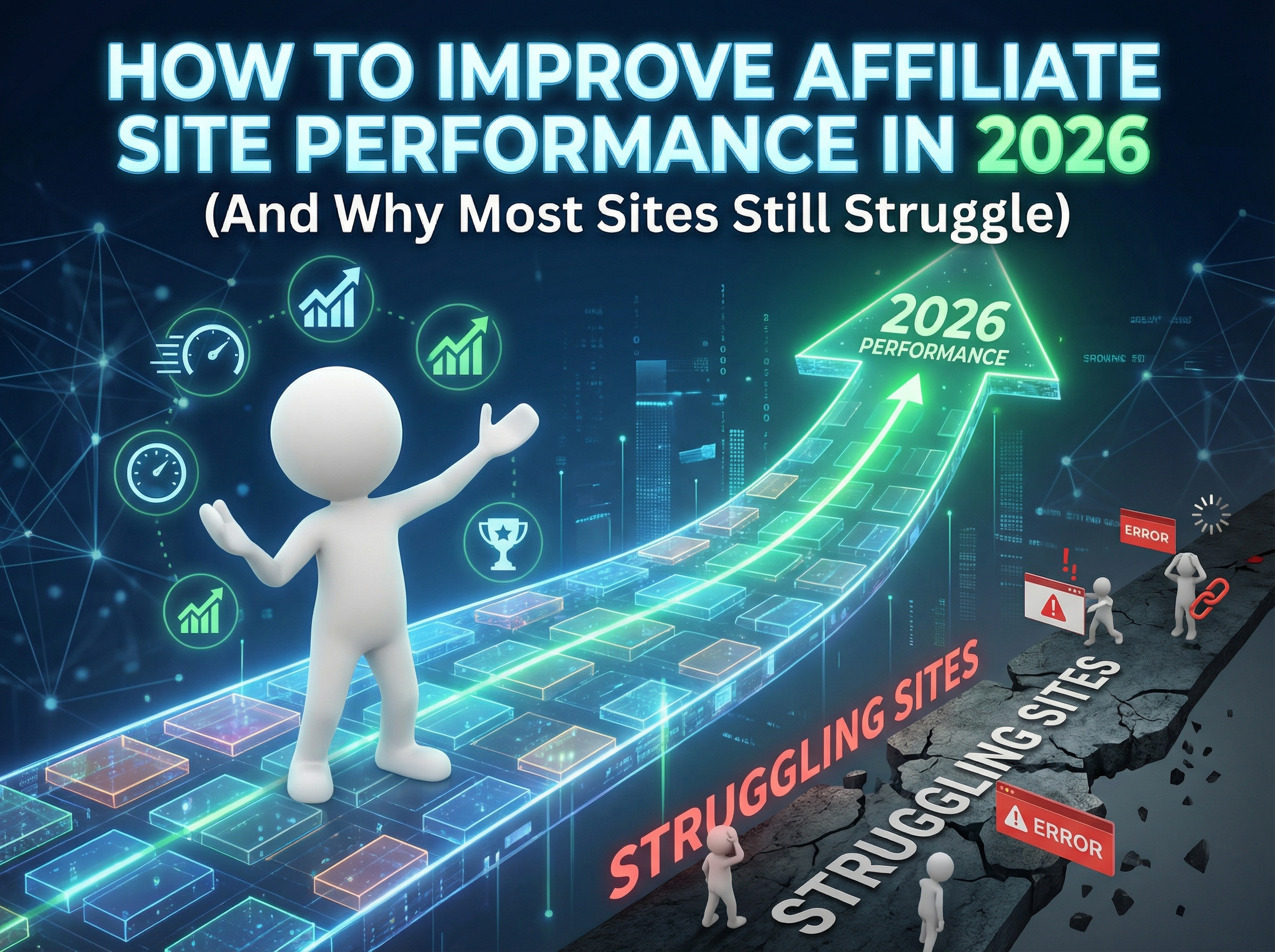
“Improve performance” sounds like a button you click. In real life, it’s usually three things: better pages, better intent match, and better trust signals. The problem is most affiliates tweak the wrong stuff first, then wonder why the graph looks like it took a nap.
TL;DR: How to Improve Affiliate Site Performance in 2026
- Fix intent first (your page must answer exactly what the searcher meant).
- Then fix the offer path (make the next step obvious and friction-free).
- Then prove trust (real-world experience beats “generic best of” pages).
- Then scale content volume (performance compounds when you publish consistently).
- Finally, tighten technical basics (speed, indexing, internal links, schema).
Why Affiliate Sites Struggle in 2026

Most “struggling” affiliate sites aren’t failing because the owner is lazy. They struggle because the site is misaligned.
The page says one thing, the searcher wanted another, and the next step feels like a sales trap. So the visitor bounces… or reads… and does nothing.
The 5 Performance Bottlenecks (What’s Actually Blocking Growth)

-
1) Intent mismatch
Your post targets “how to” but reads like a review. Or it targets “best” but never compares like a buyer’s guide. In 2026, that mismatch is the fastest way to lose rankings and conversions.
-
2) Weak next-step path
The reader finishes your page and has no idea what to do next. Or you give them ten CTAs and they do none. One clear path beats five “options.”
-
3) Thin trust signals
No proof you’ve tested anything, no photos, no experiences, no “here’s what happened when I did it.” Generic content is everywhere now. “Real” stands out.
-
4) Content volume gap
Many sites stop too early. They publish 15–30 posts, don’t see a payoff, and walk away right before the compounding phase.
-
5) Technical/structure friction
Slow pages, weak internal linking, poor indexing, missing schema, or messy site architecture. Not glamorous—but it matters.
Performance = Traffic × Conversion × Authority
Most people only obsess over traffic. But traffic by itself is just… visitors. Performance is what happens after the click.
Conversion: Does the page guide a decision (or just “talk”)?
Authority: Does the reader believe you… enough to take the next step?
The 30 → 100 Article Gap (Where Most People Quietly Lose)

If you want the uncomfortable truth: a lot of affiliate sites stall because they simply don’t publish enough high-intent pages to build momentum.
Not “write 100 posts and you’re guaranteed to win.” That’s not the point. The point is that compounding needs inventory: more entry points, more internal links, more topical coverage, more chances to rank, and more chances to convert.
The Practical 2026 Performance Audit (Do This Before You “Try Harder”)

- Intent: Does the title match the searcher’s goal (learn vs compare vs buy)?
- Above-the-fold: Is the first screen clear about who the page is for and what it solves?
- Scannability: Do you have clean sections, short paragraphs, and real headings (not fluff)?
- Trust signals: Do you include personal experience, photos/tests, clear disclaimers, and real outcomes?
- Internal links: Are you guiding readers to the next logical step (not random “related posts”)?
- CTR: Is the snippet/title compelling enough to win the click?
- Conversion path: After the reader gets value, do they know the next step?
- Schema: Are FAQ and structure helping search engines understand your page?
The Compounding Model (What “Better Performance” Really Looks Like)

Here’s the shift that matters in 2026: stop thinking “one post = one result.” Start thinking “one post = one asset inside a system.”
If you want the “start here” version of the bigger system (and the order to build it in), you’ll find it on the core roadmap: Start Here: Your Path From 0 to 100K.
FAQ: Affiliate Site Performance in 2026
How do I improve affiliate site performance fast?
Fix intent and clarity first. Make sure your page answers exactly what the searcher meant, then create one obvious next step (another guide, a comparison, or a tool). “Fast” improvements usually come from aligning intent + tightening conversion path.
Why do affiliate sites struggle in 2026?
Competition is higher, generic content blends in, and search engines reward helpful structure and credibility. Sites struggle when they publish thin pages, don’t build topical coverage, and don’t show real experience.
What should I fix first: traffic or conversions?
Conversions. If your pages don’t guide decisions, more traffic just means more visitors leaving. Once the path is clear, traffic improvements become more valuable.
How many articles does an affiliate site need?
Enough to cover a topic properly. Many sites stall around 15–30 posts because they haven’t built enough coverage and internal linking for compounding to kick in. Consistency matters more than a magic number.
Does schema help affiliate posts rank?
Schema helps search engines understand your content and may improve how your page appears in results. It’s not a cheat code, but paired with clear structure and useful answers, it’s a strong support signal.
What’s the biggest mistake affiliates make when trying to “optimize”?
They polish the site before the page is useful. Logos, colors, and fancy layouts don’t fix unclear intent or thin trust. Clarity, usefulness, and credibility come first.
Last updated: February 2026 • Author: Jeremy





Leave a Reply