
Last Updated on November 5, 2025 by Jeremy

Hi, I’m Jeremy Denesovych — a content creator, full-time RV traveler, and affiliate marketing educator behind From 0 → 100K. My mission is simple: help creators build real online income through clarity, systems, and consistency — not hacks or hype.
This article is part of my live Wealthy Affiliate Bootcamp series where I document the exact workflows, tools, and prompts I use to scale from side hustle to six-figure affiliate business.
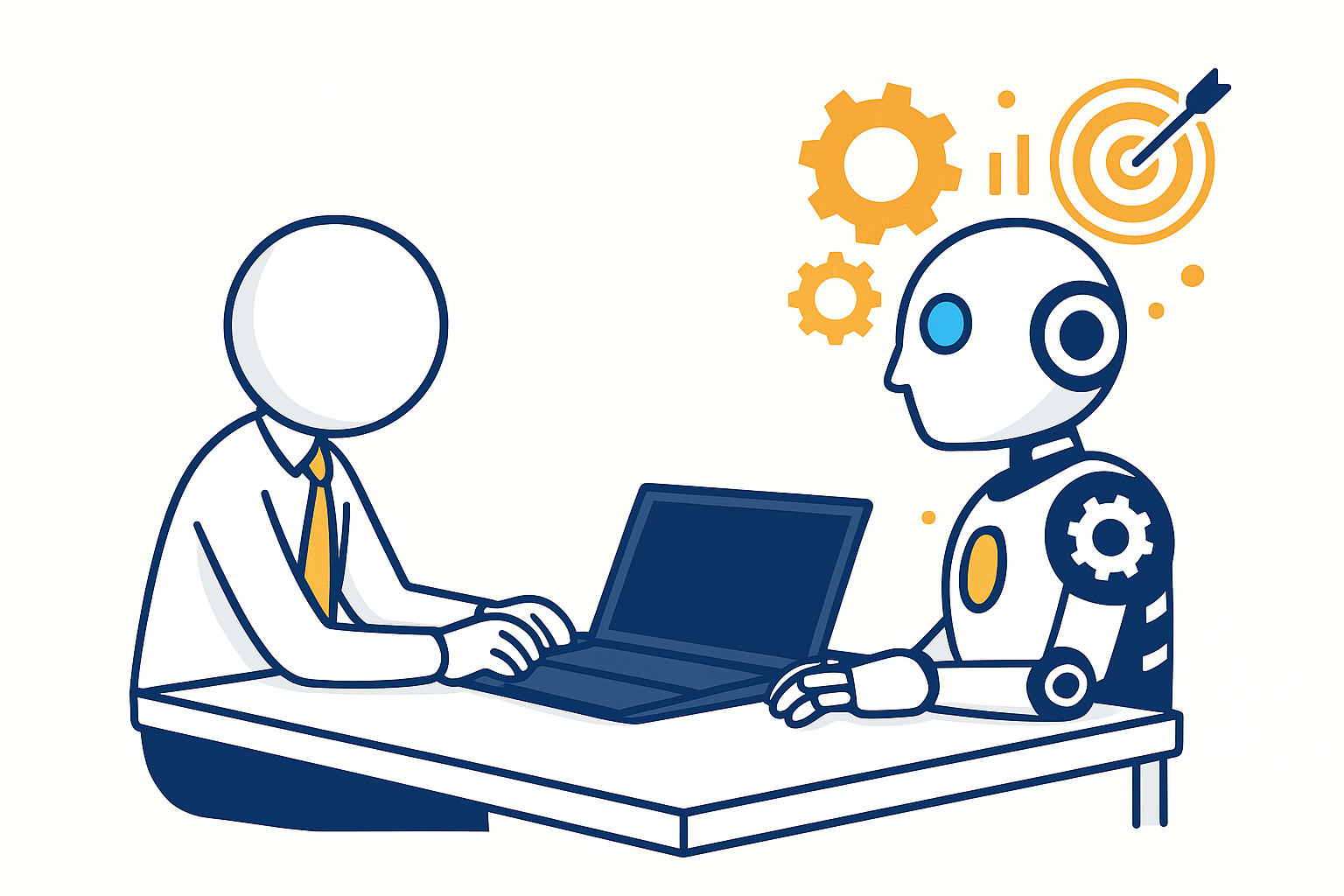
AI won’t replace you —it replaces the friction that keeps you from publishing. Treat it like a partner — structure, speed, polish — not a ghostwriter. This guide breaks down my five-stage AI workflow for affiliate marketers who want to publish weekly, keep their voice intact, and actually convert readers into referrals.
TL;DR — What You’ll Learn
- How to use AI as a partner — not a replacement — in your affiliate workflow.
- The five-stage system I use weekly: Validate → Outline → Draft → Visualize → Optimize.
- Where AI fits (and where it shouldn’t) so your content stays authentic and rankable.
- Which free or included tools inside Wealthy Affiliate and beyond make this easy.
The Real Problem Isn’t AI — It’s Misuse
Four Mistakes
- Blank-page outsourcing: “Write an article on X” → wallpaper copy.
- Voice replacement: style cosplay that doesn’t sound like you.
- Tool FOMO: twelve apps, zero cadence.
- Metric blindness: no defined step AI should speed up.
The Partner Model
- Decide funnel, cadence, and CTA moments first.
- Use context prompts: audience, outcome, structure, examples.
- Keep a single brief you paste everywhere.
- Finish with a human pass: stories, stance, offers, links.
How I Stopped Fighting the Tool
Audience: beginners building an affiliate site who hate overwhelm.
Outcome: publish a step-by-step post with two CTAs and a checklist.
Angle: AI as partner (structure + speed), not replacement (voice + story stay mine).
Those three lines turned AI from a vending machine into a power tool. I asked it for outlines, bullets, comparisons, validation—then I added the stories and offers that convert.

The 5-Stage Workflow (Publish Weekly)
- Validate → evidence of interest + fresh angle.
- Outline → H2/H3 scaffold with bullets and CTA map.
- Draft → section-based, three short passes (Draft, Specificity, Story).
- Visualize → one clean image every ~800–1,000 words (16:9).
- Polish → mobile/AEO/SEO checks + FAQ + internal links.
Stage 1 — Validate the Idea (7–10 Minutes)
Check intent, recency, and a differentiator you can prove with one story or screenshot. Lock it into a one-sentence Angle Statement you’ll paste into every prompt.
Stage 2 — Outline With Context (12–15 Minutes)
Copy-Ready Outline Prompt
Role: senior content strategist. Audience: beginner affiliates. Outcome: 2,200–2,800-word tutorial with 2 CTAs + 1 checklist. Angle: [paste]. Constraints: short paragraphs, bullets for dense info, 16:9 images ~every 1,000 words, suggest natural CTA spots. Deliver: H2/H3 outline with bullets, “next steps,” 3 headline options. Important: ask 3 clarifying questions before drafting.
Stage 3 — Draft in Sections (Then Humanize)
Co-draft one H2 at a time. Cap outputs at ~200 words; immediately add your story line and one internal link. Read it out loud once—your ear catches tone slips fast.
The Three Passes
- Draft: 180–220 words max per subhead; logic and structure only.
- Specificity: add examples, stats, screenshots; replace abstractions.
- Story: one line that proves you’ve lived it.
CTA Placement
- Top: open WA tools.
- Middle: after first result story (highest converting).
- Bottom: full system invitation.

Stage 4 — Visualize Concepts (5–10 Minutes)
- Use concept illustrations, quick process screenshots, or before/after comparisons.
- Keep everything 16:9 and under ~180KB; add descriptive alt text.
- Brand quietly: small navy URL in a corner—not a watermark.
Stage 5 — Optimize for AEO & SEO (8–12 Minutes)
Human Readability
- Answer the promise in 2–3 sentences.
- Paragraphs < 80 words; bullets for dense info.
- Heading every 250–350 words.
- 1–2 internal links to related posts.
Machine Understanding
- 3–5 FAQs at the end + FAQ schema.
- Alt text, author metadata, unique meta title/description.
- Consistent slug (e.g., ai-partner-guide).
The Essential 5 (One Tool per Purpose)
1) Wealthy Affiliate AI Suite
Validation, outlines, drafting, and DSGNPop banners—publisher-ready inside WA.
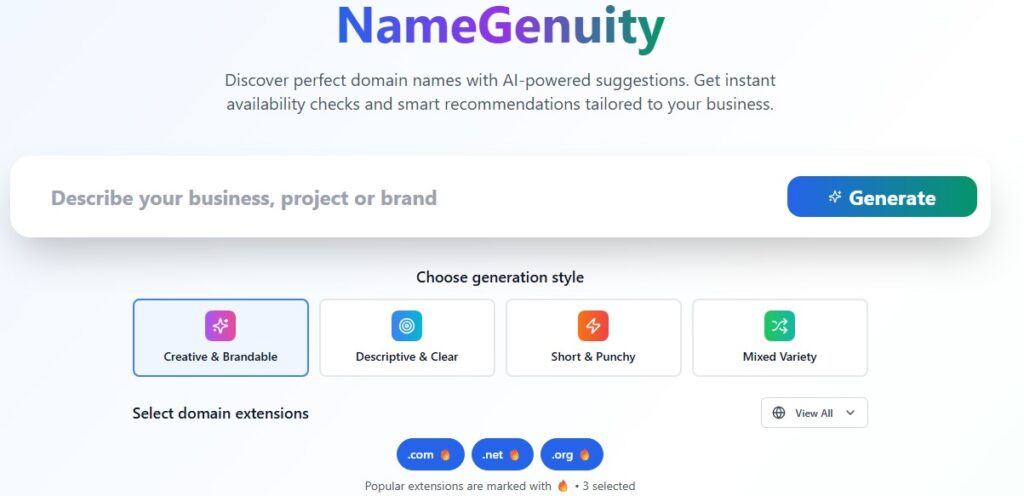
2) NameGenuity
Smart, brandable domain ideas with instant availability checks for campaigns or new sites.
3) MillionSpark
Fast topic validation and search-intent checks. Run 3–5 ideas weekly before outlining.
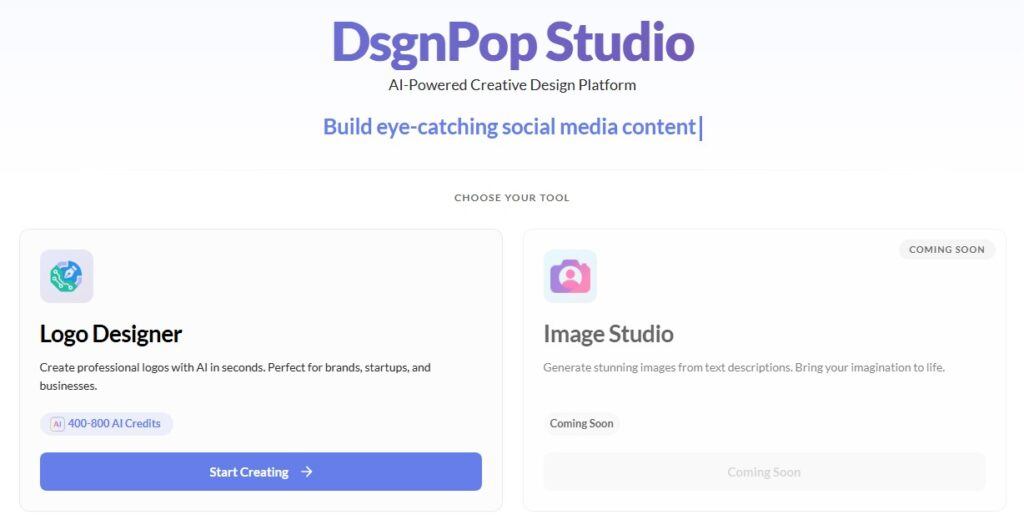
4) DSGNPop (inside WA)
Branded social cards, mockups, and 16:9 banners in your navy/gold palette—minutes, not hours.
5) ChatGPT
Your brainstorming partner: outlines, counter-arguments, clarity rewrites, and prompt testing. Paste your Angle Statement on every run.
Bonus Tools (Use as Needed)
- Google Gemini — fact comparisons & recency checks.
- Perplexity — citations for EEAT-friendly summaries.
- Writesonic — alternate intros/metas and ad variants.
- Canva (AI) — infographics + social repurposing.
- Fireflies.ai — call notes → blog-ready summaries.
Reusable Prompt Mini-Library
Idea Validation: “List 5 post ideas for [audience] about [problem]. For each: show intent, a unique angle, and a proof I can add.”
Outline: “Build an H2/H3 outline for 2,400 words. Short, benefit-first headings. Suggest natural CTA spots and one internal link.”
Draft Section: “Write 180–200 words for [section]. Short paragraphs; one bullet or numbered list.”
Specificity: “Replace abstractions with concrete examples or data (2024–2025). Keep total under 230 words.”
Humanize: “Add one sentence of lived experience or metaphor that proves the point.”
Mobile-First QA (Quick Pass)
- Body 16–18px, line-height 1.7–1.8; CTAs full-width under 480px.
- Images 16:9, lazy-loaded; no galleries wider than the screen.
- Two-column grids collapse to one below 768px.
Closing Thoughts
AI isn’t here to write for you—it’s here to help you publish with purpose. When you use it to validate the idea, shape a clear outline, co-draft in tight sections, and polish for humans and discovery engines, you get the best of both worlds: speed and a voice that’s still yours.
What to do next (15-minute action plan)
- Write a one-sentence Angle Statement for your next post.
- Run 3 topic ideas through your validator, pick one, and build the H2/H3 outline.
- Draft the first section using the three-pass habit (Draft → Specificity → Story).
Stay consistent, not heroic. One solid article a week, wired with thoughtful CTAs, compounds faster than occasional “perfect” posts. Your system is the moat—AI just makes it easier to defend.
Quick FAQ
Does AI hurt rankings?
No. Engines reward expertise and clarity. Use AI for structure; add your own stories and stance.
How many tools do I actually need?
Start with the Essential 5—one per purpose. Add bonus tools only when the use-case appears.
Where should CTAs go?
Top (context), middle after your first result story, and bottom (full system).
Structured Data & EEAT Schema
Show JSON-LD (copy & paste)
{
  "@context": "https://schema.org",
  "@type": "Article",
  "headline": "The 5-Stage AI Partner Workflow for Affiliate Marketers",
  "author": {"@type":"Person","name":"Jeremy Denesovych","url":"https://from0to100k.com/about"},
  "publisher": {"@type":"Organization","name":"From 0 → 100K","logo":{"@type":"ImageObject","url":"https://from0to100k.com/wp-content/uploads/2025/04/0100K-logo-navy-gold.png"}},
  "mainEntityOfPage": "https://from0to100k.com/",
  "image": "https://cdn.pixabay.com/photo/2023/10/21/00/36/ai-8330457_1280.jpg",
  "datePublished": "2025-11-05",
  "dateModified": "2025-11-05",
  "about": [{"@type":"Thing","name":"Affiliate Marketing"},{"@type":"Thing","name":"AI Tools"},{"@type":"Thing","name":"Wealthy Affiliate"}],
  "keywords": ["AI tools","affiliate marketing","Wealthy Affiliate","NameGenuity","DSGNPop","ChatGPT","SEO","AEO"],
  "description": "A five-stage AI workflow built for affiliate marketers — validate, outline, draft, visualize, and optimize with mobile-first, EEAT-friendly structure."
}
Final Takeaway
AI multiplies whatever you bring to it. Bring clarity, publish weekly, and wire CTAs that respect the reader. That’s how you build durable traffic—and income—without burning out.
© 2025 Jeremy Denesovych | From 0 → 100K — EEAT-optimized, AEO-ready content for real affiliate growth. Disclosure: affiliate links help keep guides free at no extra cost to you.
Comments
10 responses to “AI Isn’t the Enemy — It’s the Partner Most Marketers Are Still Misusing”
-
Hi Jeremy, great page and layout. As you stated, AI is misused as I have been learning since starting into Affiliate Marketing. I did not realize I was misusing it until I had read the information you provided. Now that I have dug deeper and have a better understanding, I hope that I will start to have better success as I use AI correctly. Thanks for the insightfulness and please keep posting like this!
Cheers to an awesome day!
Pauline
-
Thanks, Pauline — that means a lot. It’s great to hear the post helped you see AI in a more useful light. Most of us start out overusing it or expecting too much from it, but once you learn to guide it like a partner, it really starts to click. Keep experimenting — that balance between your voice and AI’s structure is where the real results show up.
Jeremy
-
-
What a fantastic post, Jeremy! I’ve grabbed a bunch of it for a Google doc for future reference 🙂
A lot of stuff I didn’t know.Thanks,
Teri
-
Hey, that’s glad to hear. Appreciate the feedback!
-
-
Thank you for that 3 sentence brief you posted. This was like gold for me as I never seem to prompt the right things and end up getting content that I can’t really use, or have to delete and edit so much I may as well have written the article myself.
I think most of us are maybe not using AI as it is intended and we are losing the human voice in our writing, and as you say, it is very important to keep this so that your content can resonate more with your readers.
-
Michel — I appreciate you saying that. Most people think AI is supposed to replace their voice, but the real power is when it strengthens it instead. A well-aimed 2–3 sentence prompt can produce cleaner structure and sharper messaging without losing personality. Once you get the hang of guiding the tone, the tool becomes a drafting partner instead of a factory.
If you ever hit a wall with prompting, feel free to ask. Sometimes one small wording shift changes everything.
-
-
Hello Jeremy!
I really enjoyed this article — thanks for breaking down why “AI isn’t the enemy” for marketers and framing it as a partner rather than a threat. As a stay-at-home mom who’s building her own online ventures (writing, homeschooling content, even thinking about launching a YouTube channel), this perspective feels hopeful and practical. It’s comforting to read that AI can help with structure, speed, and polish — as long as we keep our own voice, stories, and authenticity front and center. Reading through your five-stage workflow (Validate → Outline → Draft → Visualize → Optimize) got me thinking about how I could apply something similar to my blog. I like that you see AI as a tool to reduce friction, not as a ghostwriter. For someone like me — juggling homeschooling, home life, and creative projects — that balance could make consistency more realistic.
I’m curious: from your experience, what’s the biggest mistake a new content creator makes when starting to use AI? And how do you guard against losing your voice and originality when AI speeds up the process so much? Also — do you have any tips for staying motivated and consistent, even when results (like traffic or conversions) don’t show up right away?
Thanks for sharing such a clear, actionable guide — it’s helped me feel less intimidated by AI and more like I can use it as a helpful sidekick.
Angela M 🙂
-
Hi Angela, thank you for this. I am glad the partner-over-replacement angle landed for you because that shift is what finally made AI useful in my own workflow. You hit the nail on the head. The goal is not to hand your voice over to a machine. The goal is to remove the friction that stops you from publishing consistently while keeping your stories, tone, and lived experience in the driver’s seat.
From what I have seen inside WA and in my own early mistakes, the biggest problem new creators run into is asking AI to “write the whole thing” and then trying to fix it afterward. That usually leads to generic content that sounds like everyone else. The better approach is to let AI handle the structure and the heavy lifting, and then you layer in the parts only you can provide. A personal example, a quick story, or one honest sentence about why the topic matters to you instantly brings the originality back.
As for protecting your voice, I use a simple habit. Before drafting anything, I write one or two lines in my own words that describe what I am trying to say. Then I use AI to expand the structure around it. That keeps me anchored so the tool never becomes the author.
On the consistency question, here is the truth I remind myself of often. Results show up after the system is in place, not before. If you wait to feel motivated, the cadence slips. If you follow a simple repeatable workflow, motivation becomes optional. Even one solid article a week compounds faster than people expect. You end up with a body of work that does the heavy lifting over time.
Keep building at a pace that fits your season of life. You are already thinking about structure, workflow, and consistency, which tells me you are on the right track. If you ever want help shaping your own five-stage process for your homeschooling or YouTube content, I am happy to walk through it with you.
Thanks again for taking the time to comment. It means a lot.
Jeremy
-
-
I really like how you break down AI as something that strengthens a marketer’s workflow rather than replaces it, and it makes me wonder how beginners know which parts of their writing process truly benefit from leaning on AI. Have you found that certain stages, like outlining or refining tone, tend to give the biggest boost in quality or speed? I’m also curious how new affiliates can avoid becoming overly dependent on AI (so their voice still feels genuine and recognizable).
-
Great question, Aly. Most beginners try to use AI for the final draft, but the biggest gains actually come earlier in the process. Outlining, clarifying ideas, tightening structure and catching blind spots are where the real time savings happen. That initial clarity makes the writing stronger before you ever polish a sentence.
I tell new affiliates to use AI as a thinking partner, not a replacement. Let it help you organize, research, and pressure-test your ideas. Then you write the parts that need your voice, your experiences, and your perspective. That balance keeps your content genuine because the core message comes from you, not the tool.
If you use AI to support your process instead of doing the whole job, your voice stays intact and your speed increases at the same time.
Jeremy
-




Leave a Reply