
Last Updated on January 22, 2026 by Jeremy
Most people think “engaging email campaigns” means better subject lines, prettier templates, or more automation. I used to think that too. Then I captured 23 leads across my free blueprint system and Brand Forge intake forms, routed them into Brevo, followed up manually, and got the kind of silence that forces you to stop guessing.
This article is the step by step system I am building right now to turn email into infrastructure, not noise. It is written for builders who want subscribers to stay, open, and eventually take action without feeling like they stepped into a promo machine.
Engagement comes from orientation and trust, not pressure. Build a welcome sequence first, write like a human, set expectations early, and delay selling until the relationship exists. Use the checklist below to ship your first engaging campaign in one afternoon.
- What makes an email campaign engaging? Clear onboarding, useful content, and trust-first messaging.
- How do I start an email campaign? Build a short welcome sequence before sending any promos.
- How do I increase open rates? Set expectations, write like a person, and send emails people would miss.
- Should I sell in the first email? Not if you care about long-term engagement and unsubscribes.
Step 1: Decide what “engaging” means for your list
Engagement is not one metric. Pick the outcome you actually want so you stop chasing vanity stats. Here are four clean definitions you can choose from. Pick one for your campaign.
- Engaging = opens (people care enough to look)
- Engaging = replies (people trust you enough to respond)
- Engaging = clicks (people move to a page willingly)
- Engaging = conversions (people take the next step when it makes sense)
In my case, the first goal is not “sales.” It is replies and trust. I captured 23 leads through my blueprint and intake systems, followed up manually, and saw no replies. That is feedback. It tells me my orientation and expectation setting need work before I can expect stronger conversions.
Step 2: Build your campaign map on one page
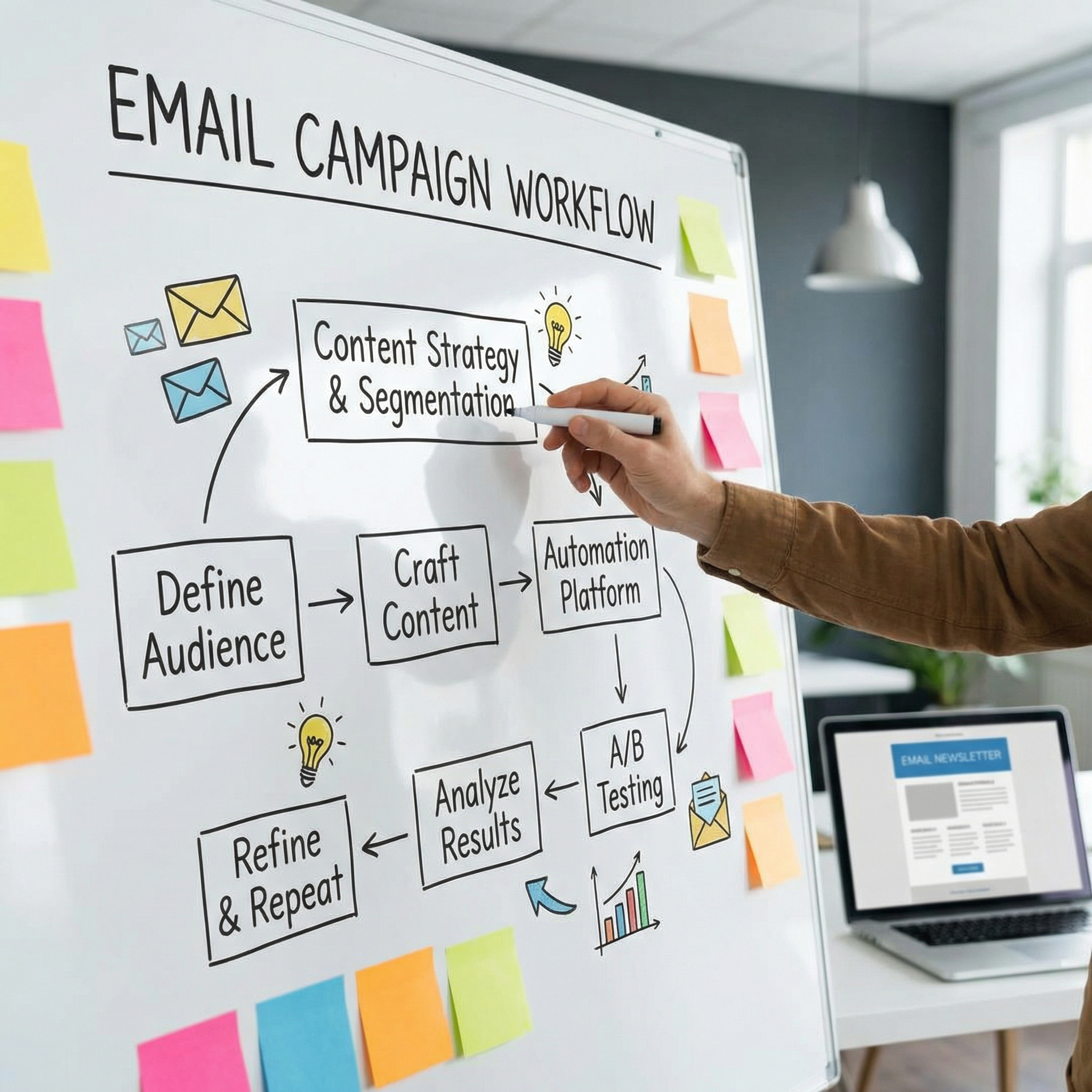
Before writing anything, map your email campaign so it has structure. This prevents random emailing and reduces the urge to pitch too early. Copy this simple map and fill it in.
- Audience: Who joined and why?
- Promise: What did they expect to receive?
- Welcome goal: What should they feel after Email #1?
- Value goal: What should they learn by Email #3?
- Offer timing: When is it fair to mention the next step?
- Core CTA: What is the single action that matters most?
If you skip this map, you end up doing what everyone does. Subject line experiments, random promos, and a list that slowly goes cold.
Step 3: Write a 5-email welcome sequence before anything else
This is the part most people avoid, then wonder why engagement is low. Your welcome sequence is where trust is built. Keep it simple. Five emails is enough to start.
- Email 1: Deliver the thing, set expectations, and sound human.
- Email 2: The story. Why you are building this and what you learned the hard way.
- Email 3: The “small win.” One actionable step they can do today.
- Email 4: The mistake to avoid. This builds trust fast.
- Email 5: Invite the next step with zero pressure.
Real example from my side. I once put a promo code in the first email of a store campaign and lost five subscribers immediately. That mistake taught me the order matters. Orientation first. Offers later.
If you want engaging emails, the subscriber has to feel like they joined a relationship, not a sales funnel.
Step 4: Use a simple writing rule that keeps you out of the promotions tab
Most spammy emails share the same vibe. Generic intro, vague credibility, implied audit, then a soft ask that leads to nonstop follow-ups. I unsubscribe from those instantly because they do not feel real.
Write as if you are sending a real update to one person who already knows your name. If it sounds like it could be mass-sent to 10,000 strangers, rewrite it.
Step 5: Track the only three numbers that matter at the start
You do not need a dashboard obsession. Early on, track only what helps you improve messaging.
- Opens: Are they even noticing you?
- Replies: Do they trust you enough to respond?
- Clicks: Are they moving forward voluntarily?
I do not have full campaign stats yet because I am still configuring Brevo sequences properly. That is my current bottleneck. The pipeline exists, but the campaigns need discipline and consistency to become real infrastructure.

Step 6: Add the “soft offer” without breaking trust
Offers are not the problem. Timing and tone are the problem. If you build orientation first, a soft offer feels natural. Use this structure.
- Remind them why they joined.
- Share a small win or insight.
- Invite the next step.
- Make it clear it is optional.
I posted the builder-side version of this topic inside Wealthy Affiliate first. If you want the live context and discussion, you can read it here: WA post link.
If you want to see the 💌 Email Marketing & Funnels tools I use and test, visit: Tools I Use.
If you want to join and follow my journey from the beginning, start here: Start Here.
Frequently Asked Questions
What is the best structure for an engaging email campaign?
Start with a welcome sequence, then move into a predictable rhythm of updates, small wins, and occasional soft offers. Engagement improves when subscribers know what to expect.
How do I write emails that do not feel spammy?
Write like you are sending a real update to one person. Set expectations early, avoid fake personalization, and do not lead with selling.
How long should my welcome sequence be?
Five emails is enough to build orientation and trust. After that, keep a consistent cadence based on what you promised at signup.
Do email campaigns still work in 2026?
Yes. Email remains one of the best owned channels. The difference is that trust-first onboarding matters more than clever promotions.



Leave a Reply