

Last Updated on January 25, 2026 by Jeremy
Most people compare affiliate marketing and 9–5 jobs by looking at income screenshots or lifestyle highlights. That comparison misses the real point. Over the years I’ve worked long physical days as a surveyor, spent time in industrial environments, traveled for family business, managed retail operations, and now operate parks seasonally while building online projects in the offseason. I’ve experienced what it feels like to work hard inside a system and what it feels like to slowly build something of your own outside of it.
So when people ask whether affiliate marketing is better than a traditional job, I don’t answer with promises or sales language. I answer with context. Both paths work. Both have costs. The difference comes down to what you value long term and how much responsibility you’re willing to carry for your own future. That’s what this comparison is really about.
- If you need guaranteed income today, a 9–5 (or any stable job) can be the right move.
- Affiliate marketing can build long-term leverage, but early income is often inconsistent and delayed.
- The real difference is control: employment trades upside for stability; affiliate marketing trades stability for ownership.
- If you want to transition, keep a safety net and don’t build alone.
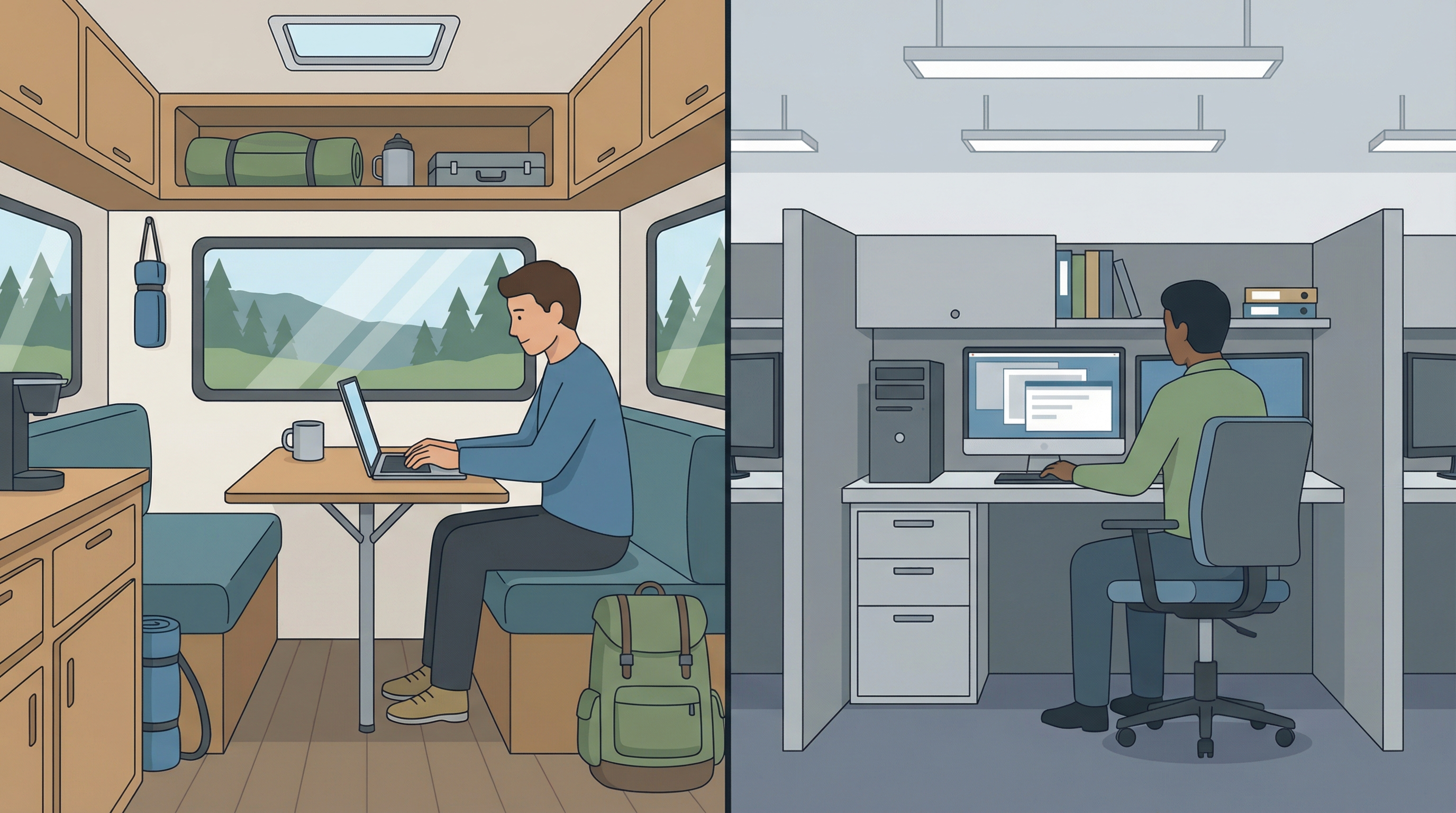
What Traditional Work Actually Feels Like Over Time
I’ve held a lot of “normal” jobs. Surveying meant long days, often twelve to sixteen hours, working outdoors in every condition. It was interesting work and I learned a lot, but it was physically exhausting and left very little room for anything else.
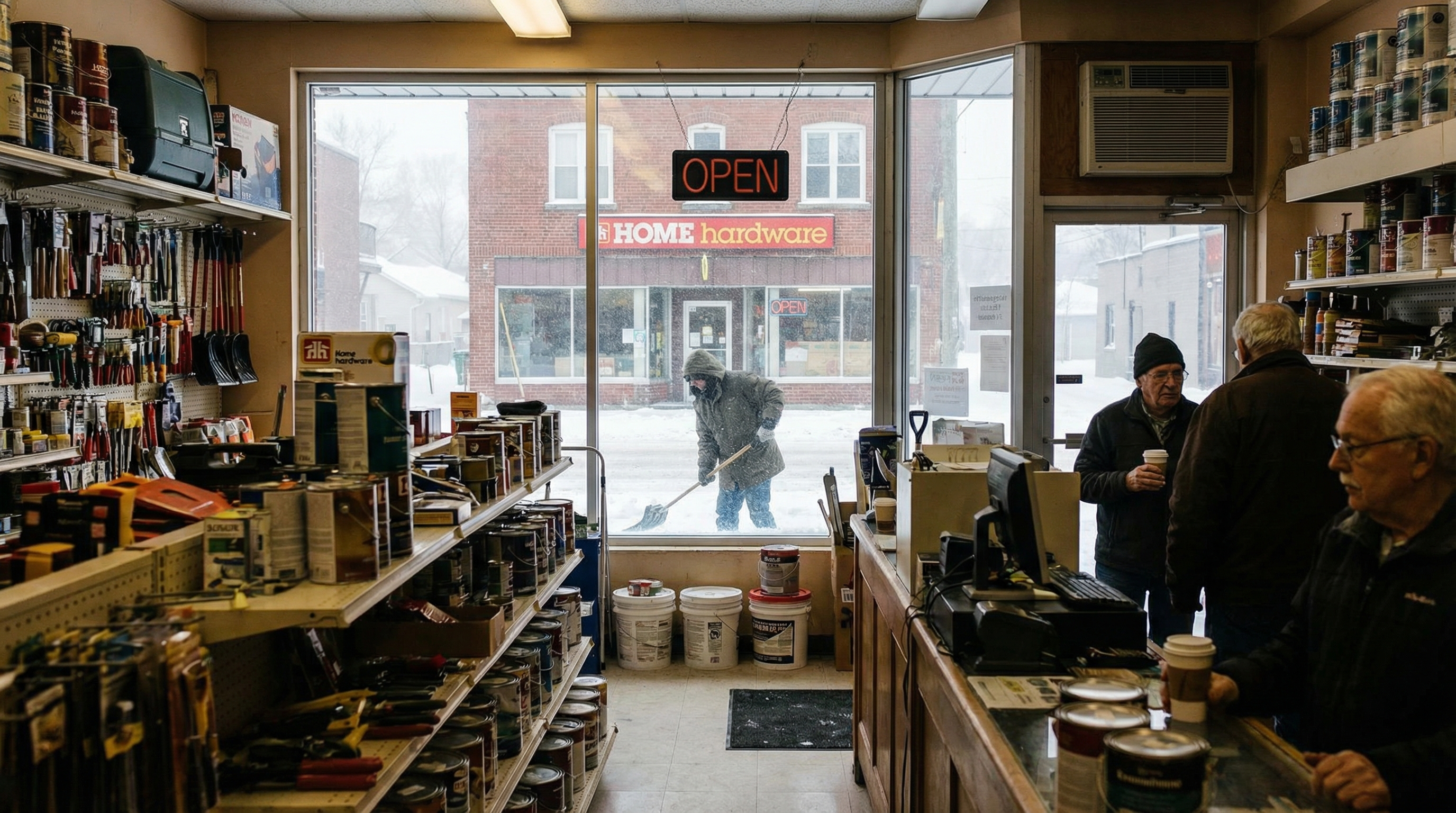
Later I worked retail management at a Home Hardware in a small town. On paper it was ideal. Stable schedule. Close to home. Community atmosphere. I genuinely cared about that job and gave it more than was required. I showed up early to clear snow during storms, stayed late when things needed to get done, and took on responsibility that technically wasn’t mine.
Over time the environment shifted. Christmas became more commercial and started earlier every year. Staff turnover increased. Expectations rose without matching compensation. Eventually I noticed backend access being removed, responsibilities quietly reversed, and subtle changes in how I was treated. It became clear that no matter how much effort I put in, control over my role was never fully mine. That was the moment the traditional system stopped feeling aligned with the life I wanted to build.
What Affiliate Marketing Changes (And What It Doesn’t)
Affiliate marketing didn’t remove work from my life. If anything, it added new types of work. When I started, I wasn’t sitting in an office with guaranteed income. I found affiliate marketing first, then took on camp hosting during summers. I would write articles in the mornings when possible and sometimes in the evenings. Some days it was an hour. Some days it was more. Some days it didn’t happen at all.
My first commissions didn’t appear until around month five. They weren’t consistent and they didn’t feel reliable at first. What did change early on was ownership. Every article published stayed online. Every website slowly built authority. Every skill added to the next project. There was no manager who could remove access to my platform or decide I was progressing too fast. That shift alone changes how you approach work.

Income Stability vs Income Ceiling
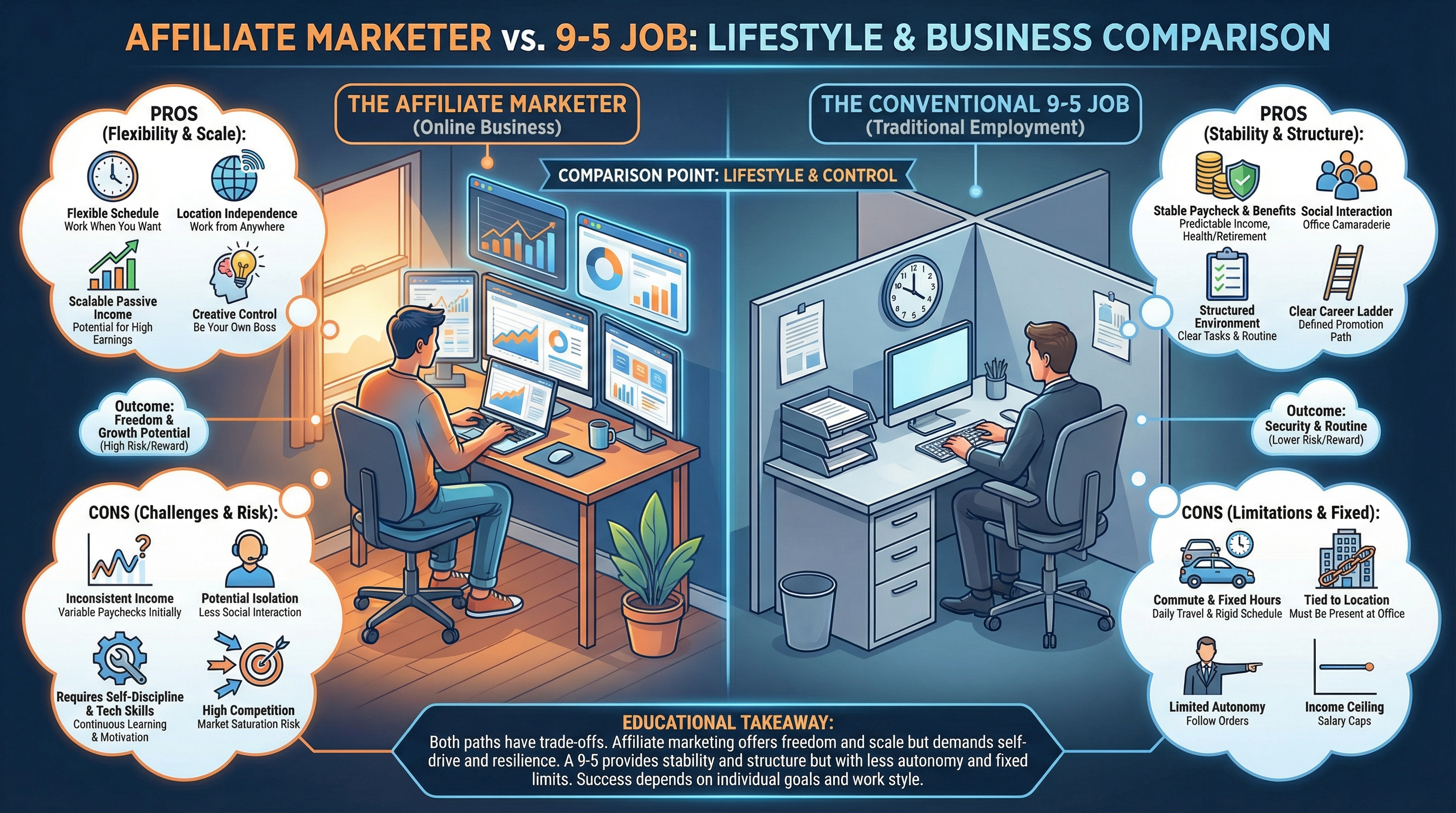
This is where people usually oversimplify the comparison. With traditional employment you typically get predictable paychecks, reliable schedules, benefits and structure, clear expectations, and limited upside unless you climb the ladder.
With affiliate marketing you deal with inconsistency early on, delayed results, no guaranteed timeline, no ceiling on growth, and full responsibility for performance. I still don’t live entirely off affiliate income. That’s important to say openly. What has changed is that some of my projects now receive consistent organic traffic and produce occasional payouts that would not exist if I had never started.
What’s interesting is that lifestyle freedom didn’t wait for massive income. Selling our house removed financial pressure. Simplifying life reduced overhead. Seasonal work combined with online income allowed us to travel more and spend winters in Costa Rica two years in a row. Not because we became wealthy, but because we stopped structuring life entirely around fixed systems.
Lifestyle Tradeoffs That Don’t Show Up Online
Affiliate marketing gives you flexibility, location independence, and creative control. It also asks more from you mentally. You have to manage your own motivation, stay consistent without a boss watching, and push through long periods where progress is slow and results are invisible. The hardest part isn’t technical. It’s psychological.
At the same time, I don’t experience the same kind of stress I used to. Working at my own pace feels different than chasing external deadlines. The pressure shifts from performance reviews to personal accountability. Burnout still exists, but it looks different. Summer park seasons are physically and socially exhausting. Offseason online work can be mentally draining. Over time I’ve learned to balance both so that one resets the other.

Who Should Probably Stay With a 9–5
Affiliate marketing is not a universal solution. It may not be a good fit if you need guaranteed income right now, prefer structured environments, dislike working online, expect fast results, believe digital business is inherently questionable, or resist learning new tools and adapting to change. There is nothing wrong with choosing stability. The real problem is staying in work that drains you simply because it feels familiar.
Who Affiliate Marketing Fits Best
Affiliate marketing tends to work better for people who enjoy building things over time, like creative problem solving, are willing to learn continuously, can tolerate delayed gratification, and value long-term leverage over short-term comfort. It’s not about being technical or already experienced. It’s about patience and consistency.
What I Tell People Who Want To Switch
When someone tells me they want to quit their job and jump into affiliate marketing, I usually tell them two things right away. First, build with a safety net. Keep income flowing while you build. Seasonal work, part-time jobs, or flexible work arrangements give you runway and reduce pressure. Burning bridges too early often creates stress that kills progress.
Second, don’t try to build alone. Community matters. Being around people doing the same thing keeps you accountable and shortens the learning curve. That’s one reason I recommend a structured environment like Wealthy Affiliate for beginners who want a clear path and support while they build.
Next step: If you want the deeper breakdown, here’s my full review: Wealthy Affiliate Review.
The Real Tradeoff
Affiliate marketing doesn’t eliminate work. It changes who controls the outcome. Instead of asking for raises, you build assets. Instead of waiting for promotions, you create leverage. Instead of relying on one paycheck, you diversify income streams. That shift isn’t easy. It takes time and discipline. But for me, it aligns far better with the life I want to live.
Author Background


If you’re curious how this transition played out behind the scenes, I’ve documented much of it in two books: Under the Picnic Table: Tales of a Park Operator and Freedom Is the New Rich. They cover both sides of this lifestyle shift, including the learning curves and personal adjustments that don’t always show up in a typical online business conversation.
Where To Start If You’re Serious
If you want a realistic roadmap instead of exaggerated promises, start here: Start Here – Your Path From 0 to 100K. You don’t need to quit your job tomorrow, and you don’t need to gamble your future. You just need to start building something that belongs to you. That’s where the real change begins.
Quick reminder: If you’re still working a 9–5, it’s completely fine to build this on the side first. Consistency beats intensity, especially in the early months.
FAQ
Is affiliate marketing better than a 9–5 job?
It depends on what you value. A 9–5 can provide stability and predictable income. Affiliate marketing can provide ownership and long-term leverage, but early income is often inconsistent.
How long does affiliate marketing take to make money?
Timelines vary. In my experience, the first commissions showed up around month five, but consistency takes longer and depends heavily on focus, content output, and staying with one main project long enough to build momentum.
Can you do affiliate marketing while working full time?
Yes. In many cases it’s the best approach because it reduces pressure. One to two hours a day (when possible) can compound over months, especially if you stay focused and keep publishing.
What’s the biggest difference between affiliate marketing and a job?
Control. With a job, you often trade upside for stability. With affiliate marketing, you trade stability for ownership, flexibility, and long-term growth potential.


Leave a Reply